

Introduction
Managing your food expenses doesn’t have to feel overwhelming when you start with a well-planned grocery list on a budget. With rising prices and busy routines, many people struggle to balance cost, nutrition, and convenience. A smart grocery strategy helps you stay organized, avoid unnecessary purchases, and make the most of every rupee or dollar you spend.
Instead of buying items randomly, a budget-focused list allows you to prioritize essentials, plan meals in advance, and reduce food waste. It also encourages healthier eating habits by focusing on simple, affordable ingredients rather than expensive processed foods. Whether you are shopping for yourself, your family, or trying to cut monthly expenses, creating a grocery list on a budget is one of the easiest ways to take control of your finances while still enjoying balanced and satisfying meals.
What Is a Grocery List on a Budget?
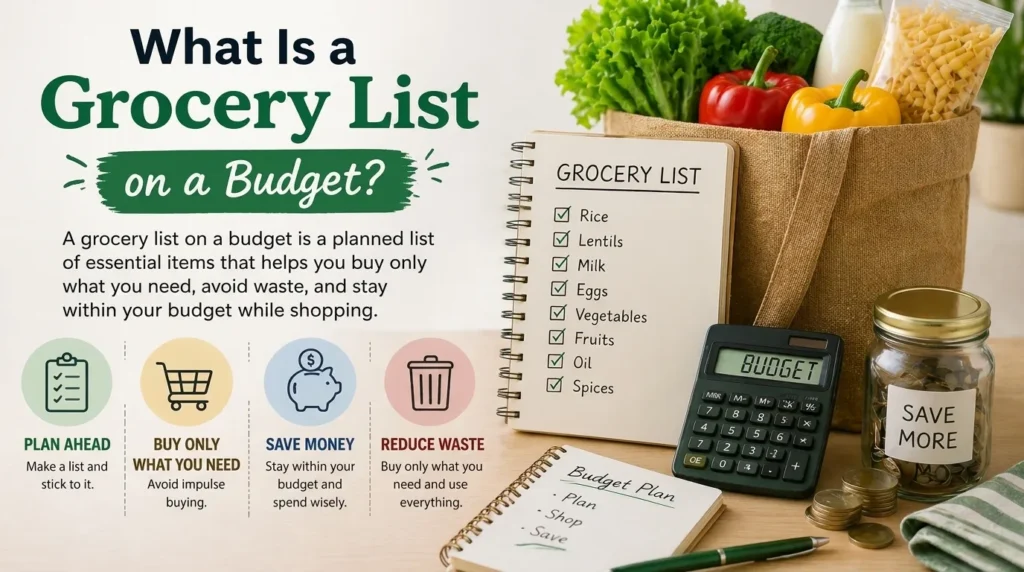
A grocery list on a budget is a thoughtfully prepared plan that helps you buy only what you truly need while staying within a specific spending limit. Instead of shopping randomly or relying on impulse decisions, this type of list is built around essential items such as basic pantry staples, fresh fruits and vegetables, and affordable sources of protein.
The main idea is to organize your shopping in advance by planning meals for the week, checking what you already have at home, and then adding only the necessary items to your list. This approach not only saves money but also brings clarity and control to your overall grocery routine.
When you follow a budget grocery list, you become more mindful of prices, discounts, and value-for-money options. You may choose store brands instead of expensive labels, buy items in bulk when it makes sense, or select seasonal produce that costs less. It also reduces the chances of buying unnecessary snacks or duplicate items that often go to waste. Over time, this habit can significantly lower your monthly food expenses while still allowing you to maintain a balanced and nutritious diet.
Why Budget Grocery Planning Matters
Budget grocery planning matters because it directly impacts both your financial stability and your overall lifestyle. Without a clear plan, it’s easy to overspend on unnecessary items, fall into the habit of impulse buying, and end up with food that goes unused. When you plan your groceries with a budget in mind, you create a system that helps you control spending, track where your money is going, and make intentional choices about what you bring into your home. This not only protects your wallet but also reduces stress, as you already know what to buy and how much to spend before stepping into the store.
Another important benefit of budget grocery planning is that it encourages smarter and healthier eating habits. When you plan meals ahead of time, you are more likely to choose balanced, home-cooked options instead of relying on expensive takeout or processed foods. It also allows you to include a variety of nutritious ingredients while still keeping costs low by focusing on affordable staples and seasonal items. This balance between cost and nutrition is key for long-term sustainability.
How to Start a Grocery List on a Budget
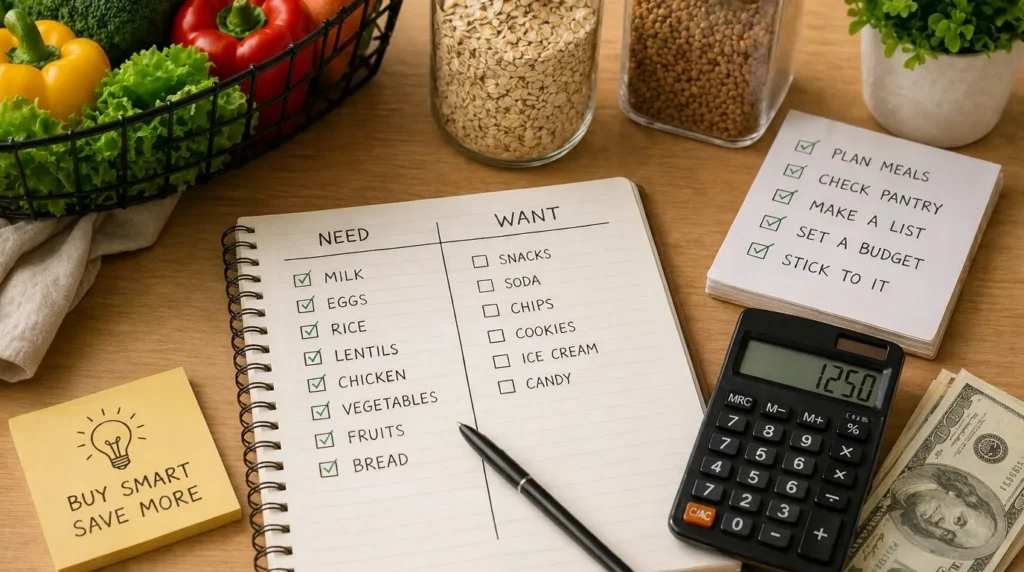
To start a grocery list on a budget, first decide how much money you can spend on groceries for the week or month. This gives you a clear limit and helps you avoid buying items that are not necessary. Before writing your list, check your kitchen, fridge, freezer, and pantry to see what you already have. Many people waste money because they buy duplicate items without realizing they already have them at home.
Next, plan simple meals around affordable ingredients. Choose foods that can be used in more than one recipe, such as rice, pasta, eggs, beans, potatoes, oats, frozen vegetables, and chicken. These items are usually budget-friendly and can help you prepare different meals without spending too much. After planning your meals, write down only the ingredients you need. Try to divide your grocery list into sections like fruits, vegetables, dairy, grains, protein, and household essentials so shopping becomes easier and faster.
Best Cheap Foods to Add to Your Grocery List
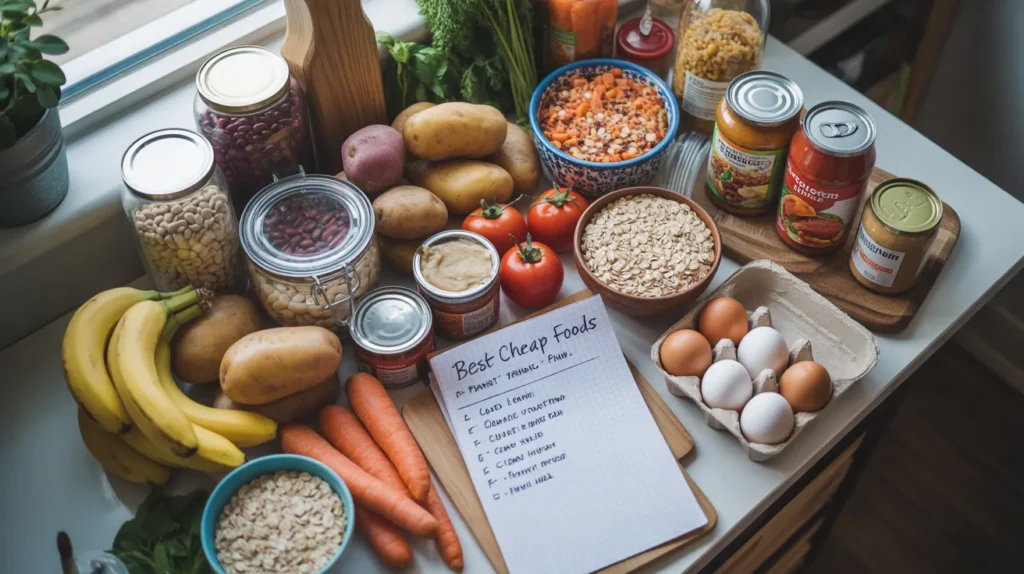
Choosing the right foods is the foundation of a successful grocery list on a budget. The goal is to focus on items that are low in cost, high in nutrition, and flexible enough to be used in multiple meals. Staple grains like rice, pasta, oats, and flour are some of the most affordable options and can serve as the base for a wide variety of dishes. Potatoes are another excellent choice because they are filling, inexpensive, and easy to cook in different ways.
For protein, budget-friendly options include eggs, lentils, beans, chickpeas, and canned tuna. These foods are not only cheaper than most meats but also provide essential nutrients and can be stored for longer periods. If you prefer meat, buying chicken in bulk or choosing less expensive cuts can help reduce costs. Dairy items like milk and yogurt can also be included in moderation, depending on your budget.
When it comes to fruits and vegetables, seasonal produce is usually the cheapest and freshest option. Items like onions, carrots, cabbage, and bananas are often available at lower prices and can be used in many recipes. Frozen vegetables are also a smart addition because they last longer and help prevent waste.
Weekly Grocery List on a Budget for Families
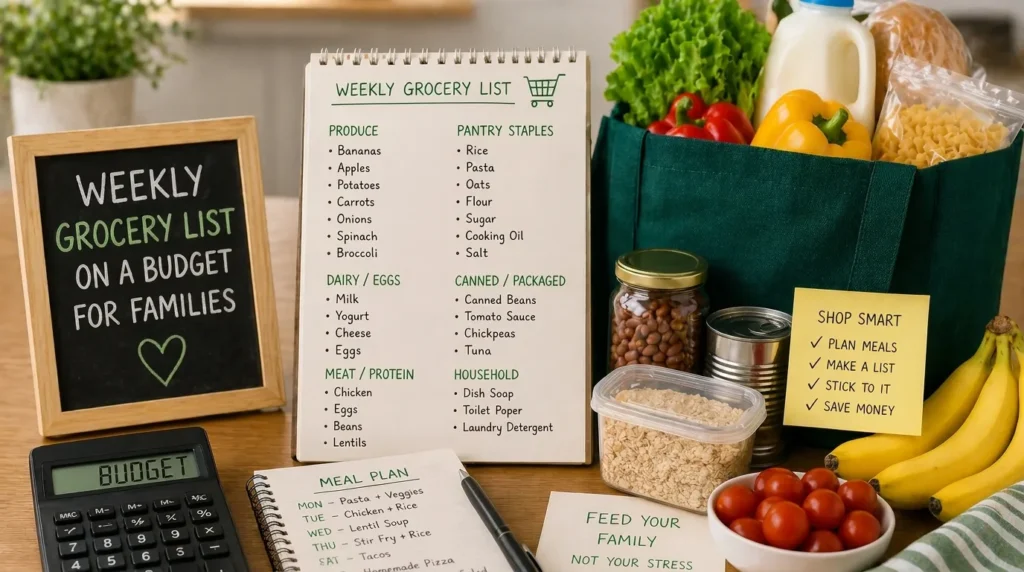
Creating a weekly grocery list on a budget for families requires smart planning so you can feed everyone well without overspending. The key is to focus on affordable, filling ingredients that can be used across multiple meals. Start with staple foods like rice, flour, pasta, and potatoes, as these form the base of many dishes and are inexpensive in bulk. Add budget-friendly protein sources such as eggs, lentils, beans, and chicken, which can be stretched into different recipes throughout the week.
For vegetables, choose low-cost and versatile options like onions, carrots, cabbage, and spinach. These can be used in curries, stir-fries, soups, and side dishes. Seasonal fruits like bananas or apples are also good additions because they are usually cheaper and provide essential nutrients. For breakfast, include simple and affordable items such as oats, bread, peanut butter, and milk, which are quick to prepare and suitable for all family members.
Grocery List on a Budget for One Person
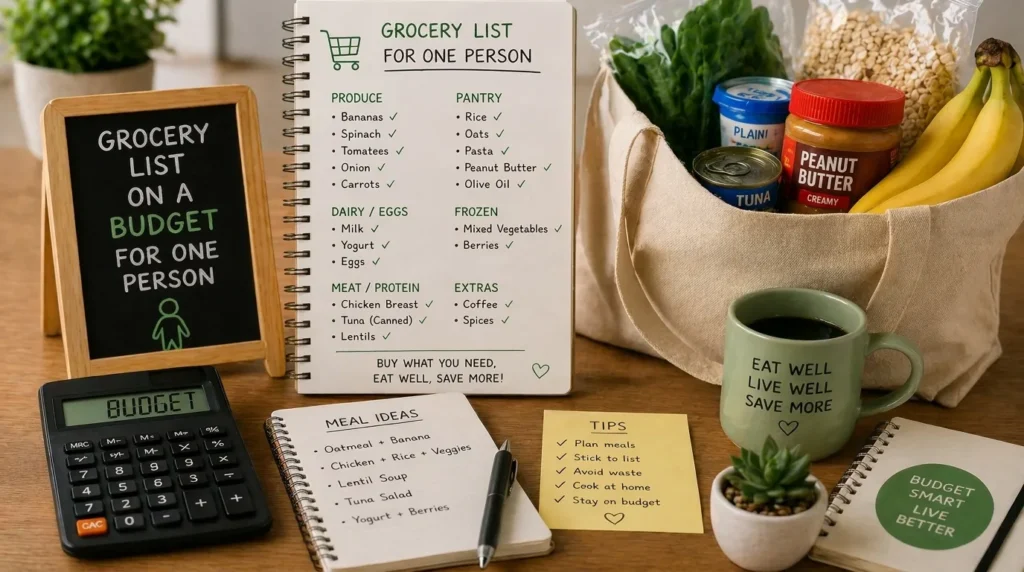
Creating a grocery list on a budget for one person is all about buying smart, avoiding waste, and choosing items that can be used in multiple meals. Since you’re shopping for yourself, portion control becomes important—buying too much often leads to spoiled food and wasted money. Start with affordable staples like rice, pasta, oats, and bread, as these are inexpensive and can form the base of many simple meals.
For protein, include budget-friendly options such as eggs, lentils, beans, and canned tuna. These are not only cheaper than most meats but also easy to store and prepare. If you prefer fresh meat, consider buying small portions of chicken and using it across different meals during the week. Frozen vegetables are especially useful for one person because they last longer and reduce the risk of spoilage, while fresh options like onions, potatoes, and carrots are also affordable and versatile.
Fruits such as bananas, oranges, or apples can be purchased in small quantities to maintain freshness and avoid waste. It’s also a good idea to cook in batches and store leftovers for later meals, which saves both time and money. By focusing on simple, long-lasting, and multi-use ingredients, you can maintain a balanced diet without overspending, making your grocery shopping efficient and budget-friendly.
Healthy Grocery List on a Budget
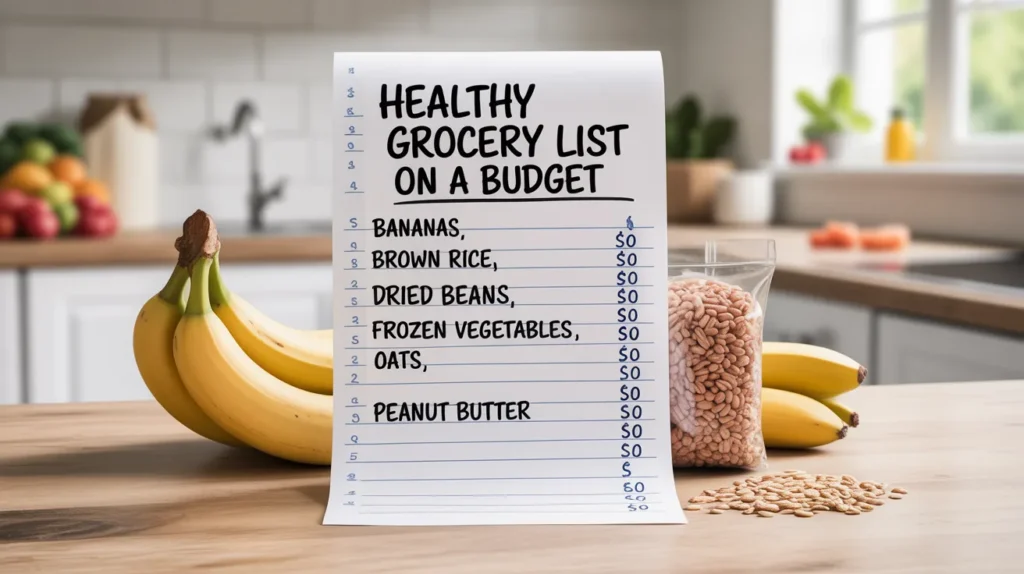
Creating a healthy grocery list on a budget is about choosing nutrient-rich foods that are affordable, filling, and easy to include in everyday meals. Instead of relying on expensive “health” products or packaged items, focus on simple whole foods that provide real nutrition at a lower cost. Start with staple grains like oats, brown rice, and whole wheat bread, which are not only budget-friendly but also rich in fiber and energy. These items can be used for breakfast, lunch, or dinner, making them highly versatile.
For protein, include low-cost and healthy options such as eggs, lentils, beans, and chickpeas. These are excellent sources of protein and essential nutrients without the high price of processed meats. If your budget allows, you can add small portions of chicken or fish for variety. Dairy items like milk and yogurt can also be included in moderation for calcium and protein.
Vegetables and fruits are essential for a healthy diet, and you don’t need to spend a lot to include them. Choose seasonal fruits and vegetables like carrots, cabbage, spinach, and bananas, as they are usually cheaper and fresher. Frozen vegetables are also a smart choice because they retain nutrients and last longer, helping you avoid waste.
Budget Grocery List for Weight Loss
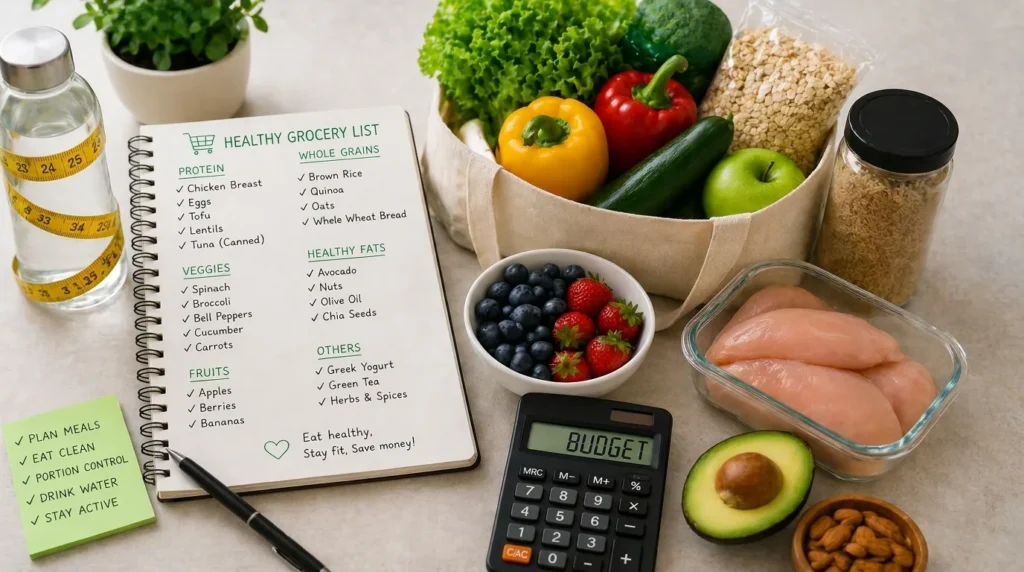
A budget grocery list for weight loss focuses on simple, low-cost foods that are filling, nutritious, and help control calorie intake without sacrificing health. The key is to choose items that are high in protein, fiber, and essential nutrients, as these keep you full for longer and reduce unnecessary snacking. Instead of expensive diet products or “weight loss” supplements, you can achieve better results with basic whole foods that are both affordable and effective.
Start with staple items like oats, brown rice, and whole wheat bread, which provide steady energy and support digestion. For protein, include eggs, lentils, beans, chickpeas, and small portions of chicken or fish. These options are budget-friendly and play a crucial role in maintaining muscle while losing weight. Adding yogurt can also support digestion and provide additional protein.
Vegetables should be a major part of your list. Choose low-cost options like cabbage, spinach, carrots, cucumbers, and tomatoes, which are rich in fiber and low in calories. Fruits such as apples, bananas, and oranges can be included in moderation for natural sweetness and vitamins. Drinking plenty of water and limiting sugary drinks also helps support your weight loss goals.
Cheap Breakfast Items for Your Grocery List
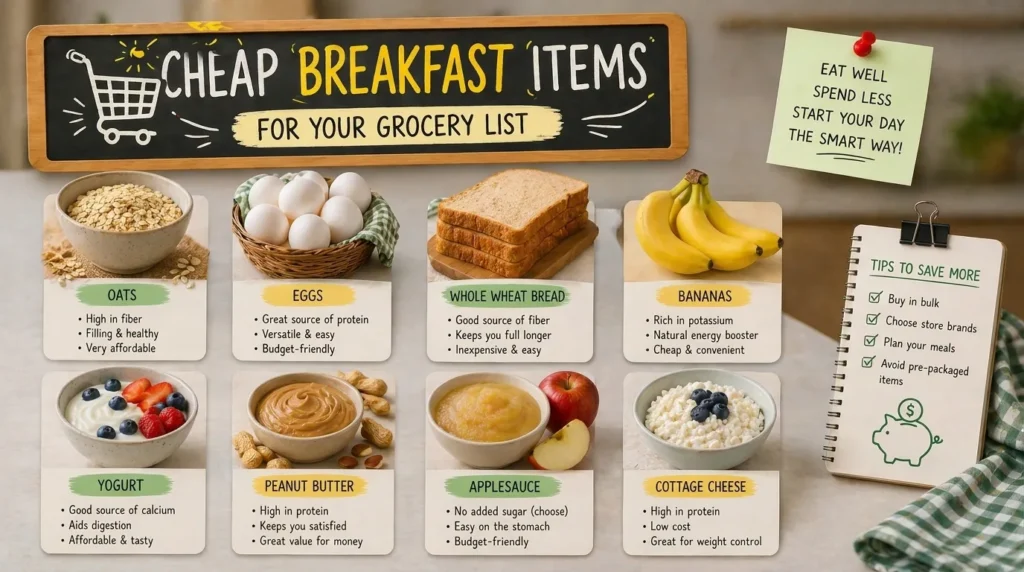
Starting your day with a healthy breakfast doesn’t have to be expensive if you choose the right items. Cheap breakfast foods are usually simple, filling, and easy to prepare, making them perfect for anyone trying to stick to a budget. Staples like oats are one of the best options because they are very affordable, high in fiber, and can be prepared in different ways such as porridge or overnight oats. Eggs are another excellent choice, offering a good source of protein at a low cost and can be cooked in multiple styles like boiled, scrambled, or fried.
Bread is also a budget-friendly breakfast item that can be paired with peanut butter, eggs, or simple spreads to create a quick and satisfying meal. If you prefer something lighter, bananas are one of the cheapest fruits and provide natural energy, making them perfect for busy mornings. Milk and yogurt can also be included if they fit your budget, adding calcium and protein to your breakfast routine.
Another smart approach is to buy items in bulk and prepare breakfast at home instead of relying on expensive outside options. Simple combinations like oats with fruit, eggs with bread, or yogurt with a banana can keep you full for hours without costing much. By focusing on these affordable and nutritious options, you can build a breakfast routine that supports both your health and your budget.
Affordable Lunch Ideas for Budget Shopping
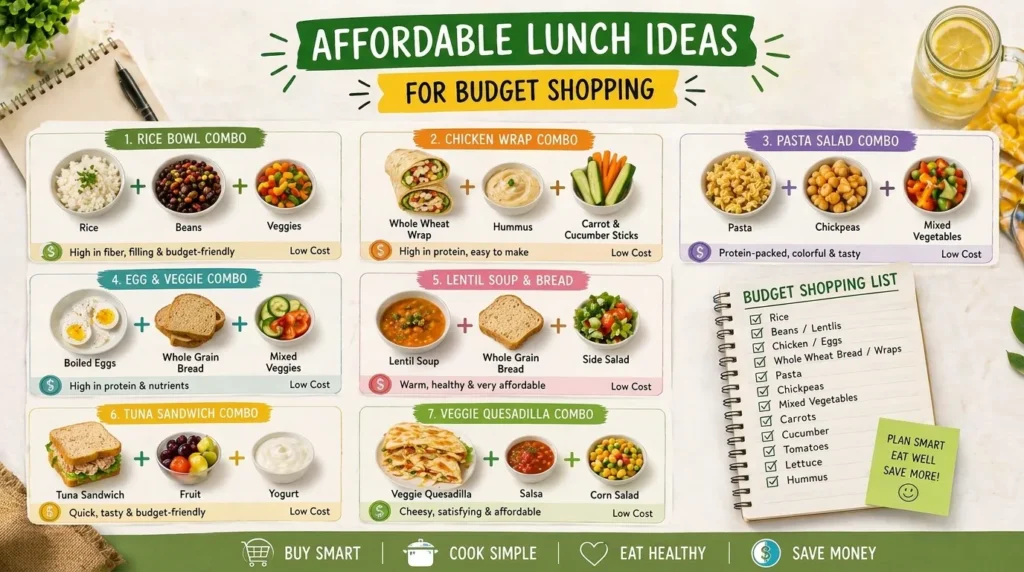
Keeping lunch affordable becomes much easier when you plan simple meals using low-cost, versatile ingredients. Instead of relying on expensive takeout, you can prepare satisfying lunches at home with items like rice, pasta, bread, and leftovers from dinner. Meals such as vegetable rice, lentil (dal) with roti, or pasta with basic sauce are not only budget-friendly but also filling and easy to cook in bulk. These options help you save money while still enjoying balanced meals during the day.
Protein is important for keeping you full, and you don’t need to spend a lot to include it. Budget-friendly choices like eggs, beans, chickpeas, and canned tuna can be turned into simple lunches such as egg sandwiches, bean wraps, or chickpea salads. Adding vegetables like onions, tomatoes, cucumbers, and carrots enhances both nutrition and flavor without increasing the cost too much. Using spices and basic seasonings can also make even the simplest meals taste better.
Low-Cost Dinner Ingredients to Buy
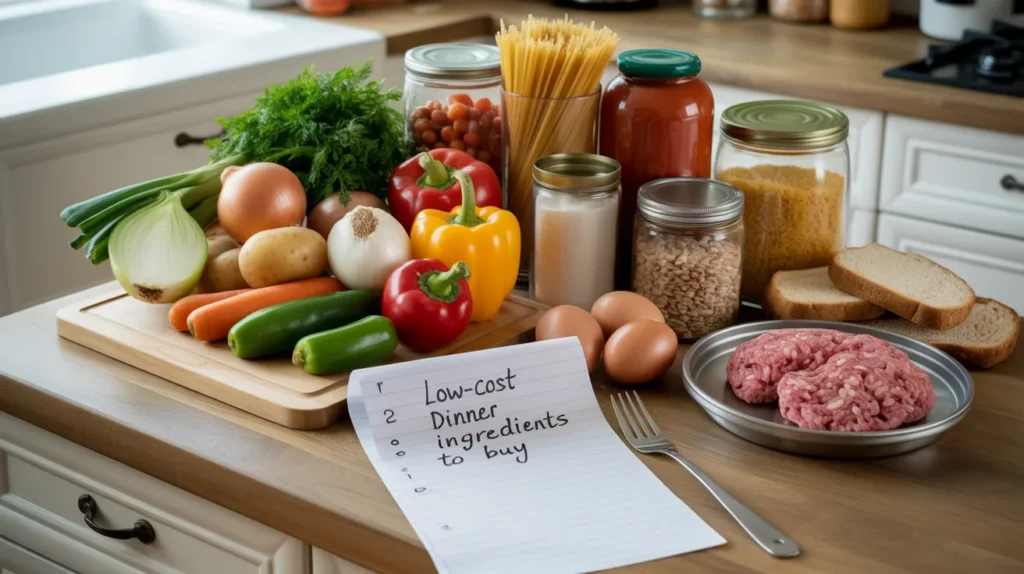
Planning dinner on a budget becomes much easier when you focus on ingredients that are affordable, filling, and flexible enough to use in different meals. Start with staple carbohydrates like rice, pasta, potatoes, and flour, as they form the base of many dinners and are very cost-effective when bought in bulk. These ingredients can be paired with simple sauces, vegetables, or proteins to create a variety of meals without increasing your grocery bill.
For protein, choose budget-friendly options such as lentils, beans, chickpeas, and eggs. These are not only inexpensive but also nutritious and easy to cook in large portions. If you prefer meat, chicken is usually one of the more affordable choices, especially when purchased in bulk or in less expensive cuts. Using smaller amounts of meat combined with vegetables and grains can help stretch your meals further while keeping costs low.
Vegetables like onions, tomatoes, carrots, cabbage, and spinach are excellent low-cost additions that bring flavor and nutrition to your dinners. Frozen vegetables are also a smart option because they last longer and reduce waste. Basic pantry items like cooking oil, salt, spices, and sauces help enhance taste without adding much expense.
Pantry Staples for a Grocery List on a Budget
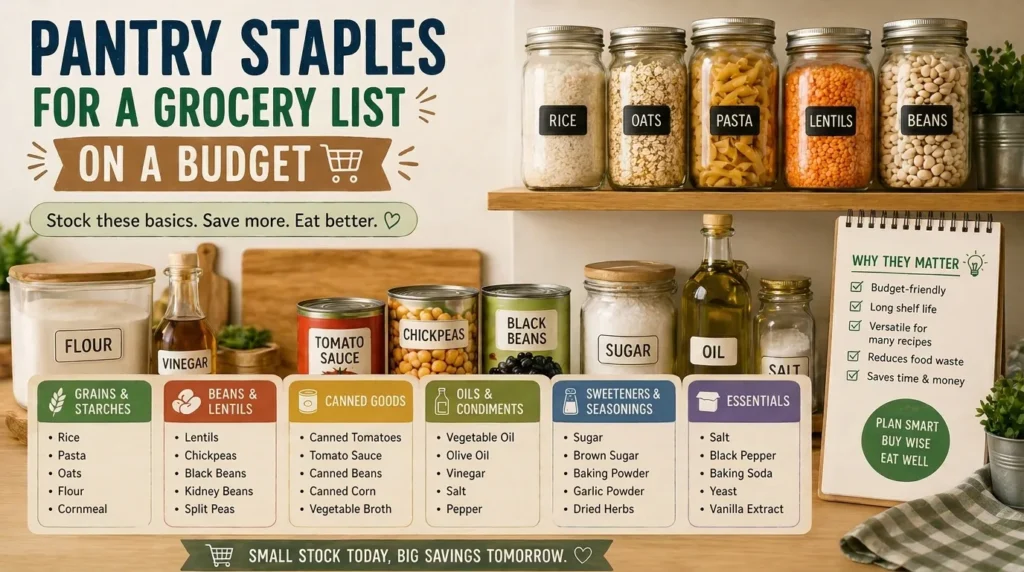
A well-stocked pantry is the backbone of any grocery list on a budget because it allows you to prepare meals quickly without needing to shop frequently. Pantry staples are long-lasting items that can be used in multiple recipes, helping you save both time and money. Start with basic grains like rice, pasta, oats, and flour, as these are inexpensive, filling, and versatile enough to form the base of many meals. Keeping these items in your kitchen ensures you always have something to cook even on a tight budget.
Next, include essential protein sources such as lentils, beans, chickpeas, and canned foods like tuna or tomatoes. These items are affordable, have a long shelf life, and can be used in a variety of dishes like soups, curries, and salads. Cooking oils, salt, sugar, and basic spices are also important pantry items because they enhance flavor and make simple meals more enjoyable without adding significant cost.
Other useful staples include peanut butter, tea or coffee, and packaged items like noodles or sauces that can help you prepare quick meals when needed. The idea is to build a pantry that supports multiple meals using the same ingredients. By investing in these budget-friendly essentials, you reduce the need for frequent shopping trips and avoid last-minute spending, making your grocery routine more efficient and cost-effective.
Frozen Foods That Help You Save Money
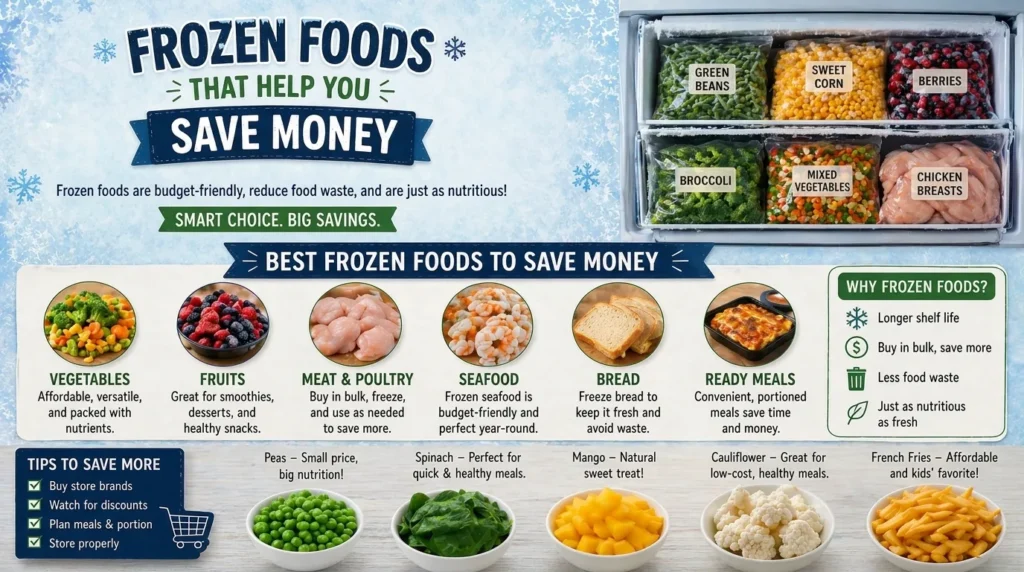
Frozen foods can be a smart and budget-friendly addition to your grocery list, especially when you want to reduce waste and make your food last longer. Unlike fresh items that spoil quickly, frozen foods have a longer shelf life, allowing you to buy in bulk without worrying about them going bad. This makes them ideal for people trying to manage their grocery expenses while still keeping a variety of ingredients at home.
Frozen vegetables like peas, carrots, spinach, and mixed veggies are some of the best options because they are usually cheaper than fresh produce and just as nutritious. They are already cleaned and chopped, which also saves time in the kitchen. Frozen fruits such as berries or mango can be used for smoothies, desserts, or breakfast, making them a versatile and cost-effective choice.
You can also find frozen protein options like chicken pieces, fish, or even ready-to-cook items that are often priced lower when bought in bulk. Another advantage is portion control—you can take out only what you need and keep the rest stored safely. This helps prevent unnecessary waste and keeps your grocery spending under control.
How to Shop Smart with a Budget Grocery List
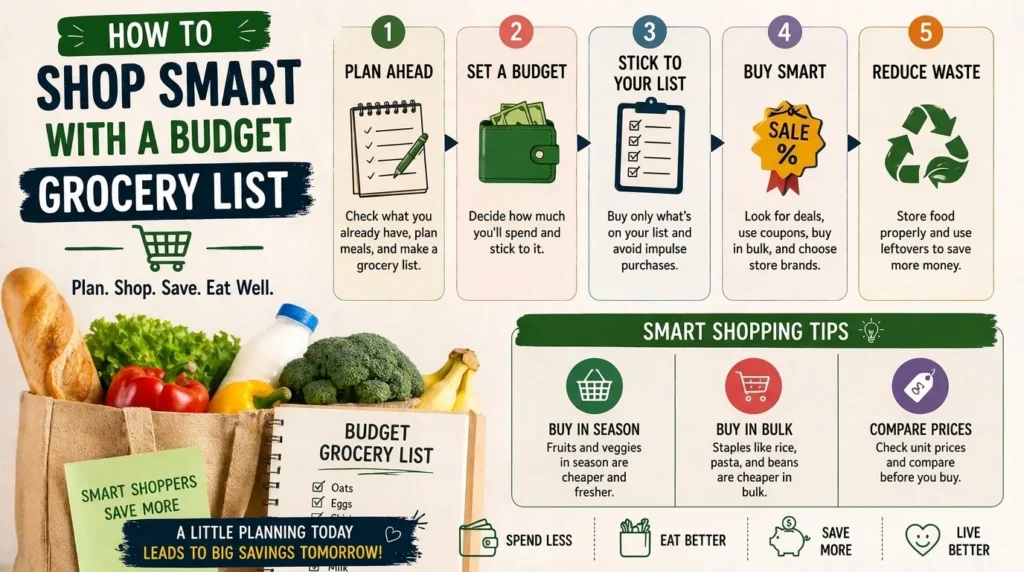
Shopping smart with a budget grocery list starts before you enter the store. First, check your kitchen, fridge, and pantry to see what you already have. This helps you avoid buying duplicate items and wasting money. Then, plan your meals for the week and write down only the ingredients you actually need. A clear list keeps your shopping focused and reduces impulse buying.
While shopping, compare prices between brands and sizes. Store-brand products are often cheaper than popular labels but can offer similar quality. Buying larger packs of items like rice, flour, oats, or lentils may also save money if you use them regularly. However, avoid bulk buying items that may expire before you finish them.
It is also smart to shop around discounts, seasonal produce, and weekly offers. Fruits and vegetables that are in season are usually fresher and more affordable. Frozen foods can also be a good choice because they last longer and reduce waste. Most importantly, stick to your grocery list and avoid unnecessary snacks, drinks, or convenience foods that increase your bill.
A budget grocery list works best when you use it with discipline. By planning ahead, comparing prices, and choosing practical items, you can shop efficiently, save money, and still bring home everything you need for healthy and satisfying meals.
Grocery List on a Budget Without Coupons
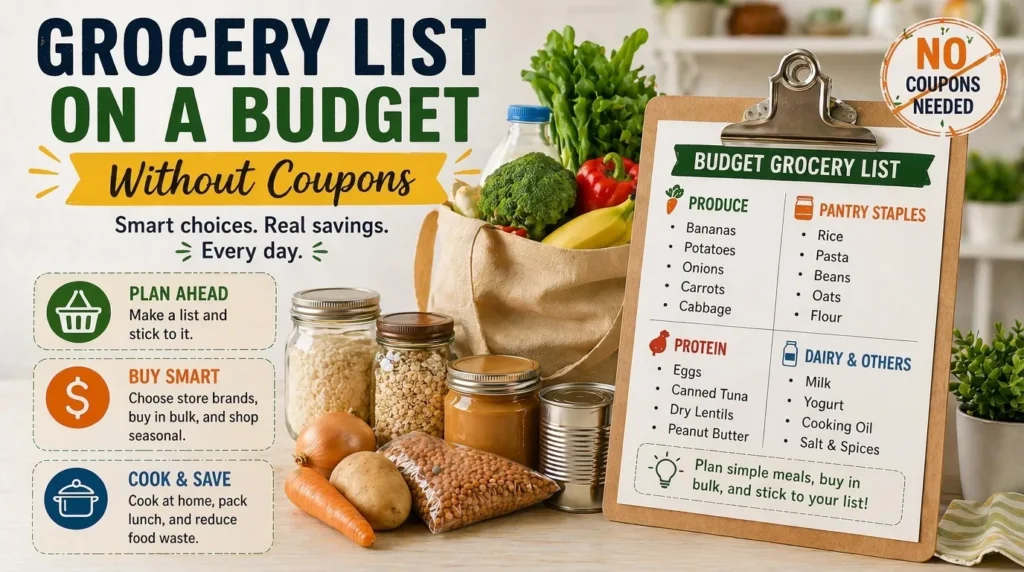
You don’t need coupons to save money on groceries—what you need is a clear plan and smart choices. A budget grocery list without coupons focuses on controlling what you buy rather than relying on discounts. Start by setting a fixed budget and planning your meals for the week. When you know exactly what you’re going to cook, you naturally avoid buying unnecessary items that increase your total bill.
One of the best ways to save without coupons is to choose simple, low-cost foods like rice, lentils, beans, eggs, and seasonal vegetables. These items are naturally affordable and can be used in multiple meals. Buying store-brand products instead of premium brands is another easy way to cut costs without sacrificing quality. You can also save by purchasing items in bulk, especially staples that you use regularly.
Shopping with discipline is just as important. Stick strictly to your grocery list and avoid impulse purchases, especially snacks, sugary drinks, and processed foods that add up quickly. Try to shop less frequently and make use of what you already have at home. Cooking in batches and using leftovers can also reduce the need for extra spending.
Common Grocery Shopping Mistakes to Avoid
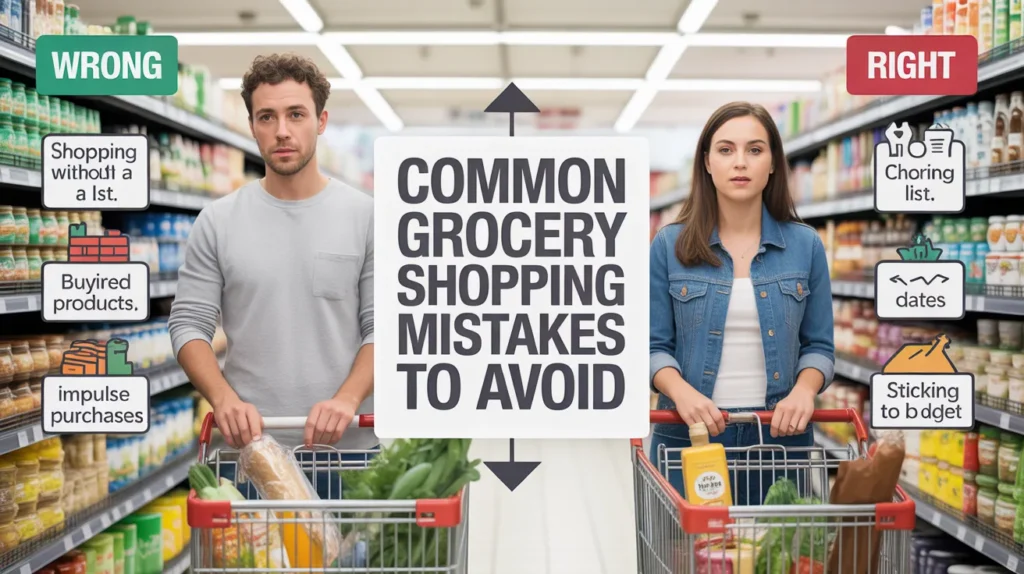
One of the biggest grocery shopping mistakes is going to the store without a proper list. When you shop without planning, you are more likely to buy unnecessary items, forget essentials, and spend more than your budget allows. Another common mistake is shopping while hungry, because this often leads to impulse purchases like snacks, sweets, and ready-made foods that quickly increase your bill.
Many people also forget to check what they already have at home before shopping. This can result in buying duplicate items while other useful ingredients remain unused. Not comparing prices is another costly habit. Sometimes store-brand products or larger packs offer better value than expensive branded items. However, buying in bulk without considering expiry dates can also waste money if the food spoils before you use it.
Another mistake is ignoring seasonal produce and relying too much on processed or convenience foods. Seasonal fruits and vegetables are usually cheaper and fresher, while processed items often cost more and offer less nutrition. To avoid these mistakes, always plan your meals, make a clear grocery list, compare prices, and stick to your budget. Smart grocery shopping is not just about spending less—it is about buying wisely and making every item useful.
How Meal Planning Makes Groceries Cheaper
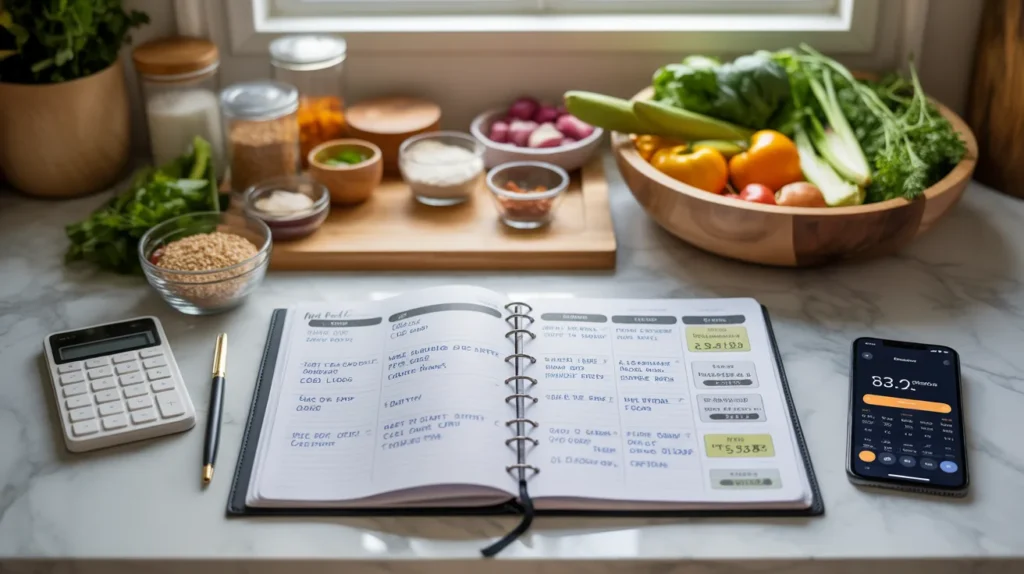
Meal planning is one of the simplest and most effective ways to reduce your grocery costs because it gives you a clear purpose for every item you buy. Instead of shopping randomly, you plan your meals for the week and create a list based only on the ingredients you actually need. This prevents unnecessary spending and helps you stay within your budget. When you know what you are going to cook each day, you are less likely to order takeout or buy extra items that don’t fit into your meals.
Another major benefit of meal planning is that it helps you use ingredients more efficiently. For example, you can plan multiple meals using the same items, such as using vegetables in both lunch and dinner or turning leftover chicken into a sandwich the next day. This reduces food waste and ensures that nothing goes unused. It also allows you to buy in bulk for certain staples, which can lower the cost per serving.
Meal planning also makes it easier to take advantage of seasonal foods and budget-friendly ingredients. By organizing your meals in advance, you can choose cheaper options without compromising on nutrition. Overall, meal planning brings structure, saves time, reduces waste, and most importantly, helps you spend less on groceries while still enjoying balanced and satisfying meals.
Best Tips to Reduce Your Grocery Bill
Reducing your grocery bill starts with planning before you shop. Always make a clear grocery list based on your weekly meals and check your pantry, fridge, and freezer first. This helps you avoid duplicate purchases and unnecessary items. Set a fixed budget before going to the store and try to stick to it as closely as possible.
Another smart tip is to compare prices and choose store-brand products instead of expensive branded items. Many store brands offer similar quality at a lower price. Buying staple foods like rice, oats, flour, pasta, lentils, and beans in bulk can also save money if you use them regularly. However, avoid bulk buying items that may expire before you finish them.
You can also reduce your bill by choosing seasonal fruits and vegetables, using frozen produce, and planning meals around affordable ingredients. Avoid shopping while hungry because it often leads to impulse buying. Limit processed snacks, sugary drinks, and ready-made meals, as these items quickly increase the total cost.
Sample Grocery List on a Budget for a Week
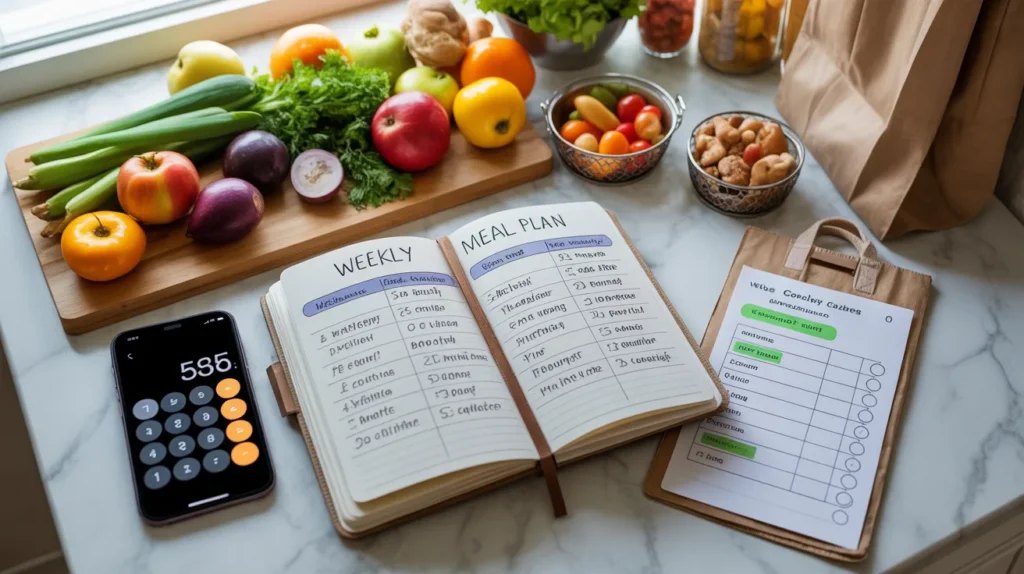
A weekly grocery list on a budget should include simple, affordable items that can be used in multiple meals. The goal is to cover breakfast, lunch, dinner, and basic snacks while keeping costs low and avoiding waste. Below is a practical example of a budget-friendly weekly grocery list:
Staples (Base Foods)
- Rice
- Flour or roti/chapati atta
- Pasta
- Oats
Protein Sources
- Eggs (1 dozen)
- Lentils (dal)
- Chickpeas or beans
- Chicken (small quantity, optional)
Vegetables (Low-Cost & Versatile):
- Onions
- Potatoes
- Carrots
- Cabbage or spinach
- Tomatoes
Fruits (Affordable Options)
- Bananas
- Apples or oranges
Dairy & Extras
- Milk
- Yogurt
- Cooking oil
- Basic spices (salt, chili powder, turmeric, etc.)
Breakfast & Snack Items
- Bread
- Peanut butter or jam
- Tea or coffee
Budget Grocery List for Students and Beginners
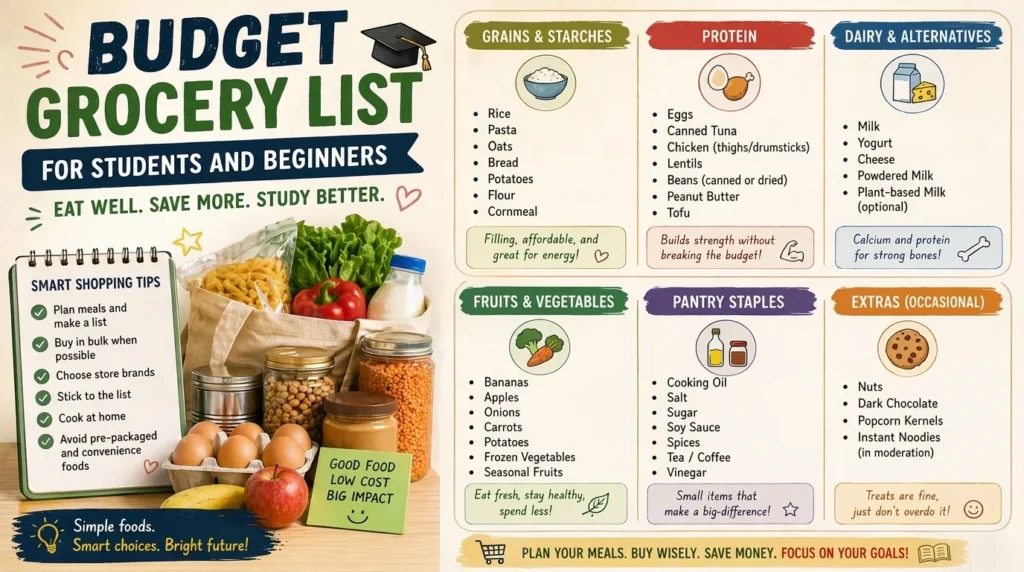
A budget grocery list for students and beginners should focus on simple, affordable, and easy-to-cook items that don’t require advanced cooking skills. When you’re just starting out, the goal is to keep things practical—buy foods that are inexpensive, quick to prepare, and can be used in multiple meals. Start with basic staples like rice, pasta, oats, bread, and potatoes. These items are cheap, filling, and form the base of many simple dishes.
For protein, include budget-friendly options such as eggs, lentils, beans, and canned tuna. These are easy to cook and provide the nutrition needed to stay energized throughout the day. You can also add small portions of chicken if your budget allows. For vegetables, go for low-cost and long-lasting options like onions, carrots, cabbage, and frozen vegetables, which are convenient and reduce waste. Fruits like bananas and apples are also affordable and require no preparation.
Final Thoughts
A grocery list on a budget is not just about spending less—it’s about developing smarter habits that improve both your finances and your daily life. When you plan your shopping with intention, you gain control over your expenses, reduce unnecessary purchases, and make better use of the food you already have. Over time, these small, consistent actions can lead to significant savings without making you feel restricted.
The key is to keep things simple and realistic. Focus on affordable, versatile ingredients, plan your meals in advance, and stick to your list while shopping. You don’t need complicated strategies or extreme changes—just a clear approach and a bit of discipline. Even small adjustments, like choosing seasonal produce, buying store brands, or using leftovers wisely, can make a noticeable difference in your grocery bill.