

Introduction
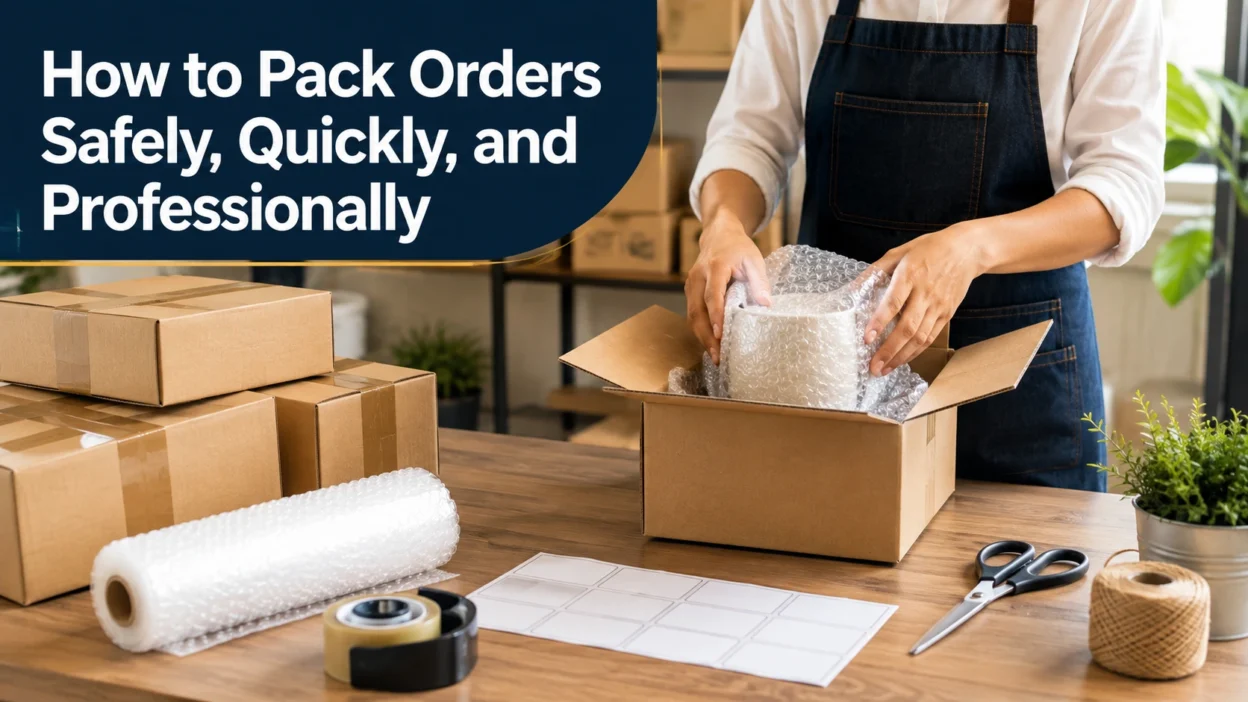
Packing orders safely, quickly, and professionally is essential for every e-commerce store, warehouse, and small business. Proper packaging protects products from damage, reduces returns, improves delivery efficiency, and creates a positive experience for customers.
A well-organized packing process also saves time, controls material costs, and helps businesses handle more orders without compromising quality. From choosing the right box and protective materials to checking product details, sealing packages, and attaching accurate labels, each step plays an important role.
Businesses should also consider the type, size, weight, and fragility of every item before packing it for shipment. Using a clear checklist and maintaining an organized packing station can reduce mistakes and speed up daily operations.
How to Organize a Packing Orders Station

An organized packing station helps employees prepare orders faster while reducing mistakes and product damage. Start by selecting a clean, well-lit area with enough space for boxes, products, labels, and packing materials.
Frequently used items, such as tape, scissors, bubble wrap, envelopes, and shipping labels, should be placed within easy reach. Packaging materials can be arranged according to their size and type so workers do not waste time searching for the right option.
It is also helpful to create separate areas for order checking, product packing, labeling, and completed packages. Keep the workstation free from unnecessary items and restock essential supplies regularly.
Packing Orders for Small Businesses

Packing orders professionally is important for small businesses because packaging directly affects product safety and customer satisfaction. Small businesses should choose packaging materials that protect the product without increasing shipping costs unnecessarily.
Lightweight mailers may be suitable for clothing, while strong cardboard boxes and protective padding are better for fragile products. Before sealing a package, the business should confirm the item, quantity, customer details, and delivery address. Adding a thank-you card, business card, or discount code can make the order feel more personal and encourage repeat purchases.
However, excessive packaging should be avoided because it increases costs and creates unnecessary waste. Small businesses can also purchase commonly used packaging materials in bulk to reduce expenses.
Packing Orders for E-Commerce Stores

For e-commerce stores, order packing is one of the final and most important stages before a product reaches the customer. Every package should protect the item during storage, transportation, and delivery. The process should begin by confirming the order number, product details, quantity, and customer address.
The correct box or mailer should then be selected according to the product’s size, weight, and level of fragility. Empty spaces inside boxes should be filled with suitable cushioning materials to prevent movement. After packing, the package must be sealed securely and labeled clearly. E-commerce businesses should also include any required invoice, return instructions, or promotional material.
Barcode scanners and order management software can help reduce packing errors, especially when handling a large number of orders.
How to Pack Multiple Orders Efficiently
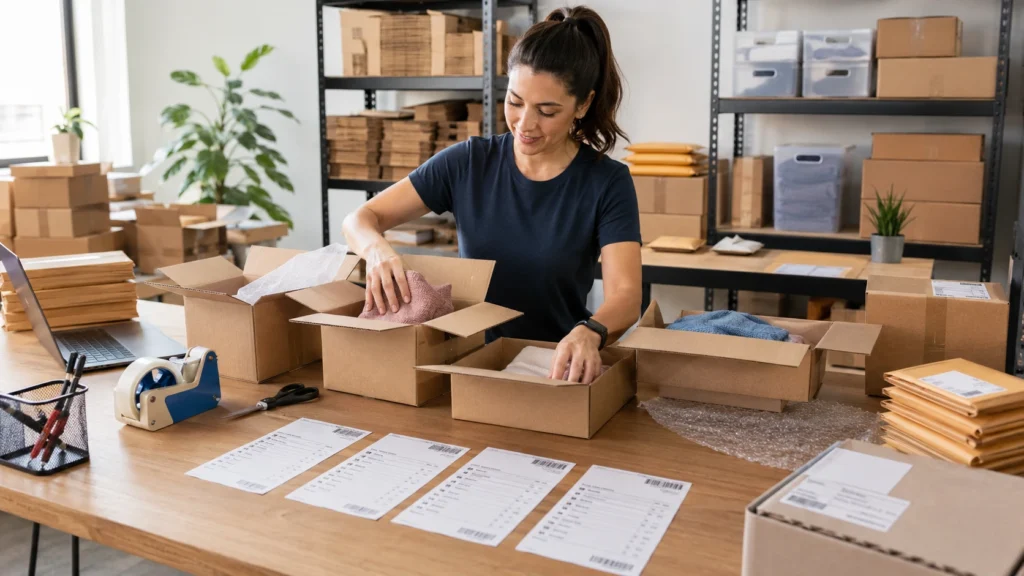
Packing multiple orders efficiently requires a clear system that prevents products, labels, and customer details from becoming mixed. One useful method is batch packing, where similar orders or products are grouped together before the packing process begins.
Each order should be placed in a separate tray, container, or marked area along with its packing slip. Workers should verify every item before placing it inside the package. Packaging materials, boxes, tape, labels, and protective supplies should be prepared in advance to reduce interruptions. Printing shipping labels in an organized sequence can also make the process easier.
However, each label must be matched carefully with the correct order before sealing the package. Using barcode scanners or order management software can improve speed and accuracy. Completed packages should be moved to a separate shipping area.
Order Picking and Packing Explained
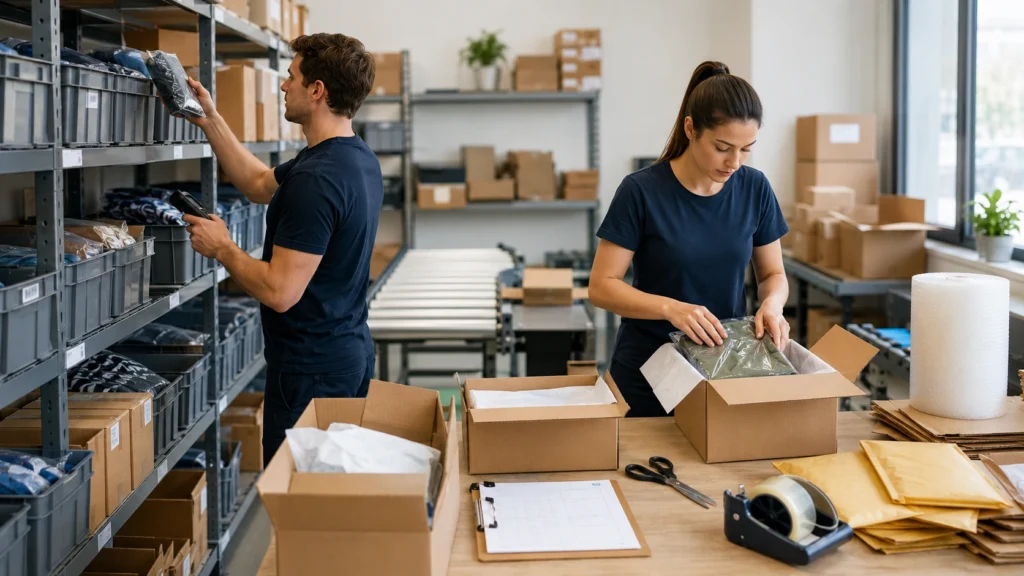
Order picking and packing are two connected stages in the order fulfilment process. Picking refers to locating and collecting the correct products from shelves, storage areas, or warehouse bins after a customer places an order. The worker must confirm the product name, size, colour, quantity, and identification code before moving it to the packing station.
Packing begins after the picked items have been checked. During this stage, products are placed in suitable packaging, protected with cushioning materials, sealed, weighed, and labelled for delivery. Accuracy is essential during both stages because a picking mistake usually results in the wrong product being packed and shipped.
Businesses can improve this process by using organised storage locations, clear product labels, barcode scanners, packing slips, and inventory management systems.
How to Reduce Packing and Shipping Costs
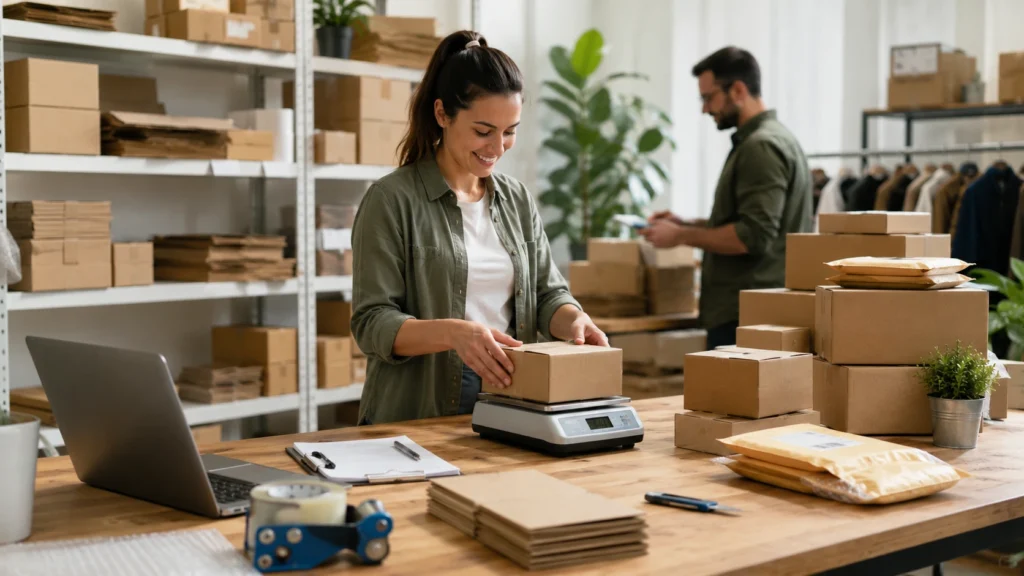
Reducing packing and shipping costs requires businesses to use the right materials, package sizes, and delivery methods. Start by selecting packaging that fits the product closely, as oversized boxes increase material usage and may result in higher shipping charges.
Lightweight mailers can be used for clothing, documents, and other non-fragile items, while sturdy boxes should be reserved for heavier or delicate products. Buying boxes, tape, labels, and protective materials in bulk can also lower the cost per order. Businesses should compare shipping companies and choose services based on package weight, destination, delivery time, and available discounts.
Avoid using excessive bubble wrap or filler unless it is necessary for product protection. Regularly reviewing packaging expenses can help identify unnecessary costs.
Best Packaging Sizes for Customer Orders
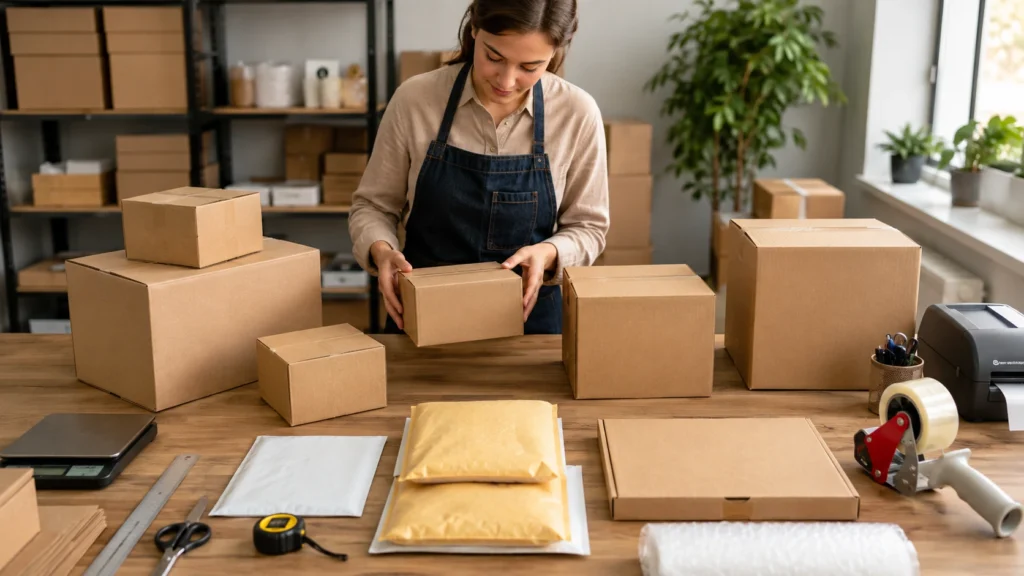
Choosing the correct packaging size is important for protecting products and controlling shipping costs. The package should be large enough to hold the product and any required protective material, but it should not leave excessive empty space.
Small products such as jewellery, accessories, and cosmetics can often be packed in compact boxes or padded envelopes. Medium-sized boxes are suitable for books, shoes, household items, and bundled orders. Larger boxes should be used only when products cannot fit safely into smaller packaging.
Fragile items may require additional space for bubble wrap, foam, or air pillows. Businesses should keep several standard packaging sizes available instead of relying on one box for every order.
How to Label Packed Orders Correctly
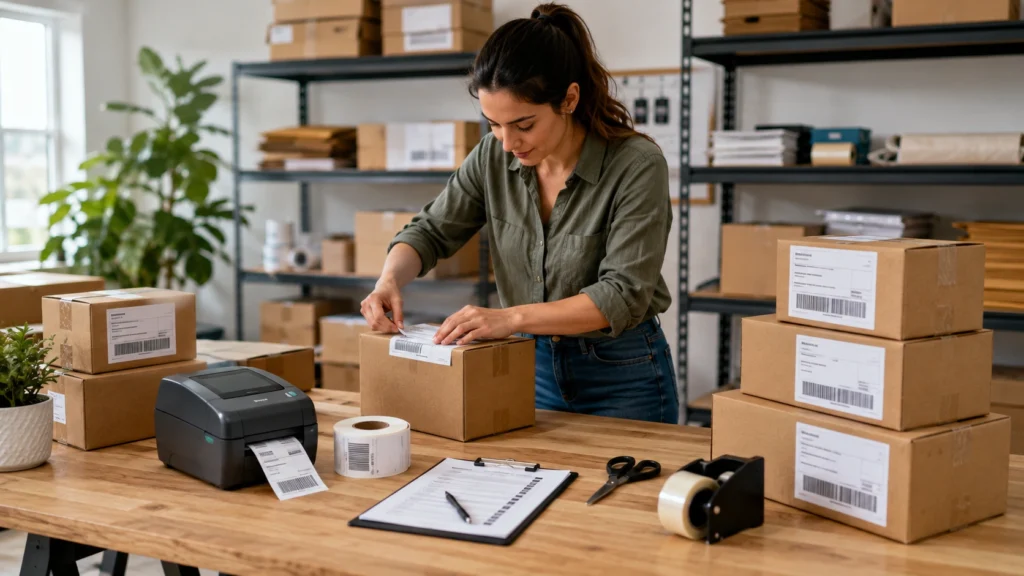
Correct labelling ensures that packed orders reach the right customer without unnecessary delays. Every shipping label should include the customer’s full name, complete delivery address, city, postal code, and contact number where required.
The sender’s name and return address should also be included in case the package cannot be delivered. Labels must be printed clearly and attached to a flat, visible area of the package. Avoid placing labels over box openings, tape edges, folds, or damaged surfaces because the barcode may become difficult to scan.
Remove or cover any old labels when reusing a box to prevent confusion during shipping. Before attaching the label, compare the order number and customer details with the packing slip. Fragile, heavy, liquid, or temperature-sensitive products may require additional handling labels.
Order Packing Tips for Faster Shipping

Faster shipping begins with an efficient packing process. Businesses should prepare boxes, mailers, labels, tape, and protective materials before order processing starts. Frequently used supplies should be kept within easy reach so employees do not waste time searching for them.
Similar orders can be grouped into batches, but each product and shipping label must remain clearly separated to avoid mistakes. A barcode scanner can help workers confirm that the correct item has been selected for each order. Standard packing procedures should be created for common product types, allowing employees to follow the same steps every time.
Shipping labels can be printed in advance and arranged in the same order as the packages. Completed parcels should be moved immediately to a separate dispatch area. Regularly restocking supplies and keeping the workstation clean also prevents delays.
How to Prevent Product Damage During Delivery
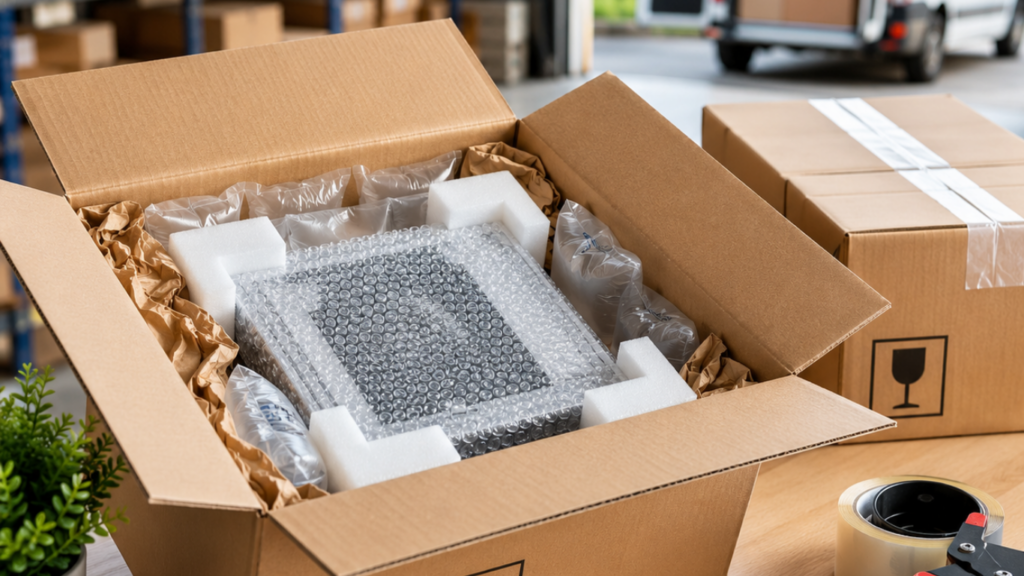
Preventing product damage during delivery starts with selecting strong and suitable packaging. The box or mailer should match the product’s size, weight, and level of fragility. Fragile items should be wrapped individually with bubble wrap, foam, or protective paper before being placed inside the package.
Any empty space should be filled so the product cannot move or hit the sides of the box during transportation. Heavy items should be packed at the bottom, while lighter products should be placed above them. When multiple items are shipped together, separators can prevent them from rubbing or colliding.
Boxes should be sealed securely with durable packing tape, especially along the bottom and centre openings. A gentle shake test can help confirm whether the contents are moving inside. Packages containing delicate products should also carry clear handling labels.
Using Bubble Wrap for Packing Orders
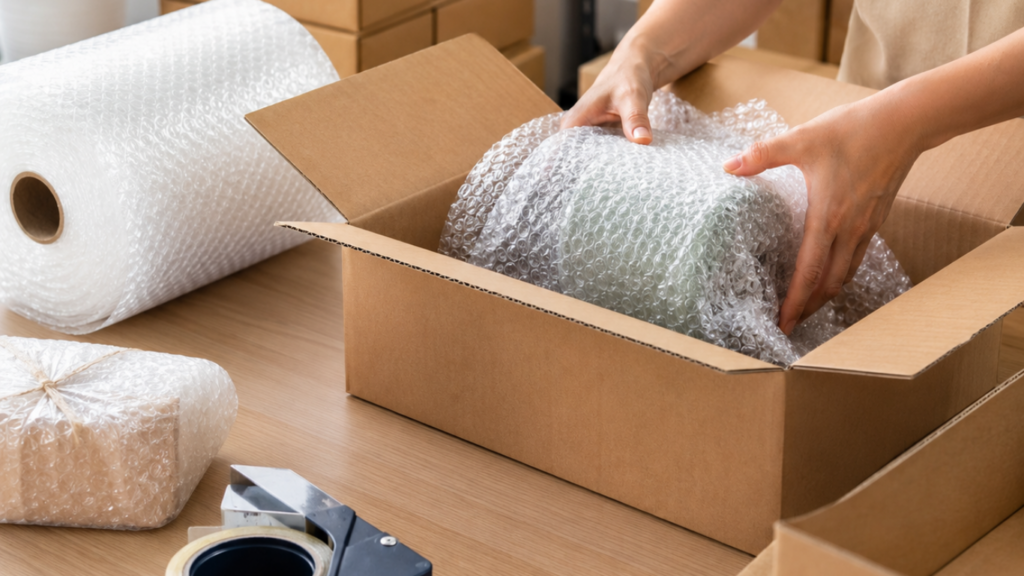
Bubble wrap is commonly used to protect fragile products during storage and delivery. It creates a protective layer around the item and helps absorb shocks, pressure, and movement inside the package.
When using bubble wrap, place the bubble side directly against the product for better cushioning. Wrap the item completely and secure the material with tape so it does not become loose during transportation. Fragile corners, edges, and delicate parts may require additional layers. For multiple products, each item should be wrapped separately to prevent contact and damage.
After wrapping, place the product inside a suitably sized box and fill any empty spaces with paper, foam, or air pillows. Avoid using excessive bubble wrap, as it can increase packaging costs and waste.
How to Pack Clothing Orders

Clothing orders should be packed neatly, securely, and in a way that protects the items from moisture, dust, and wrinkles. Before packing, inspect each garment for damage, stains, loose threads, or incorrect sizing.
Fold the clothing carefully and place it inside a clean plastic sleeve, tissue paper, or protective bag. Lightweight clothing can usually be shipped in durable poly mailers, while expensive, heavy, or delicate garments may require a box. Avoid using oversized packaging because it increases shipping costs and allows items to move unnecessarily.
The customer’s order details, size, colour, and quantity should be checked before sealing the package. Businesses may also include care instructions, return information, or a thank-you card. The outer package should be sealed properly and labelled clearly.
How to Pack Food and Beverage Orders
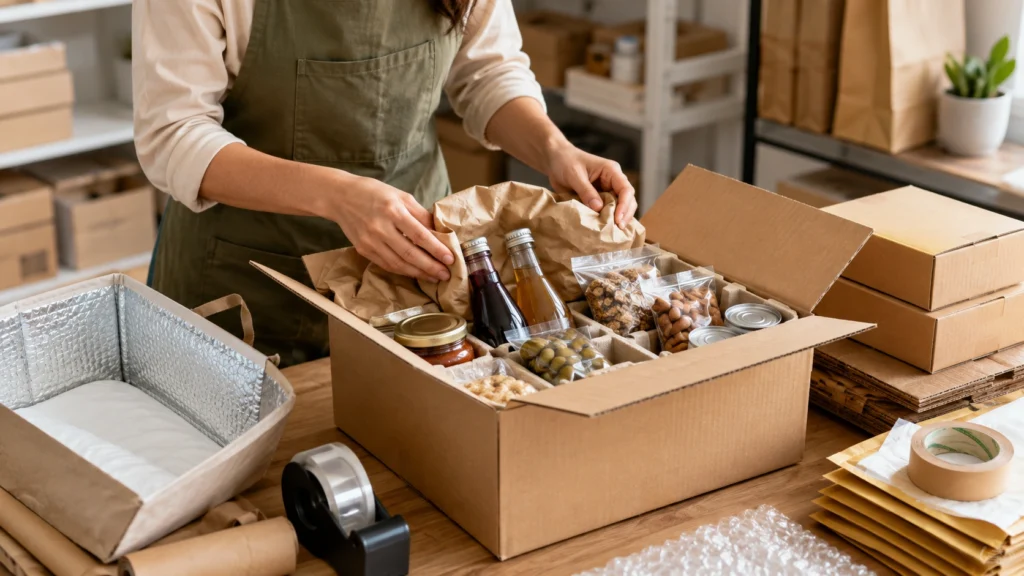
Food and beverage orders require careful packaging to maintain freshness, prevent leakage, and protect products from contamination. Only clean, food-safe containers should be used, and each container must be sealed tightly before being placed inside the outer package.
Liquids should be packed upright and secured with additional protective material to reduce the risk of spills. Glass bottles and jars should be wrapped individually and separated with cardboard dividers or cushioning. Perishable products may require insulated packaging, cold packs, or temperature-controlled delivery, depending on the product and delivery time.
Dry foods should be protected from moisture and placed in sealed bags or containers. The package should clearly display any required storage instructions, expiry information, allergen details, or handling labels. Businesses must also follow applicable food safety and shipping regulations.
How to Pack Electronic Products Safely
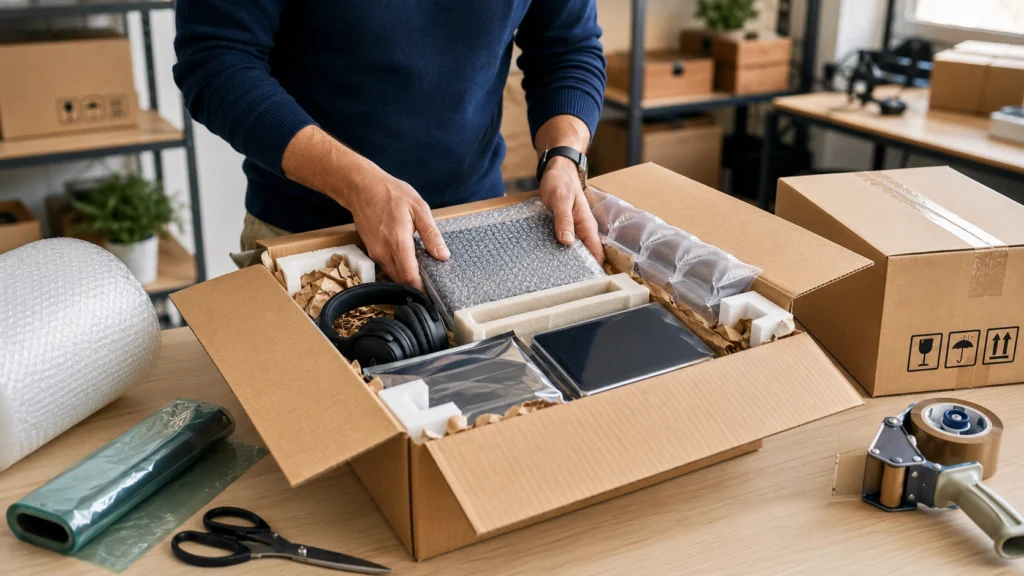
Electronic products are sensitive to impact, moisture, dust, and static electricity, so they require strong and protective packaging. Before packing, turn off the device and remove batteries where appropriate and permitted. Small electronic components should be placed in anti-static bags to reduce the risk of electrostatic damage.
Wrap the product with foam, bubble wrap, or other cushioning material, paying special attention to screens, corners, buttons, and ports. Accessories such as cables, chargers, and adapters should be packed separately to prevent scratches. Place the wrapped device inside a strong box with enough padding on all sides.
The product should not move when the package is gently shaken. Use durable tape to seal every opening and attach any necessary fragile or electronic handling labels.
How to Pack Cosmetics and Beauty Products

Cosmetics and beauty products should be packed carefully because many items can leak, break, melt, or become contaminated during delivery. Check that every lid, cap, pump, and seal is closed securely before packing. Bottles, jars, powders, and glass containers should be wrapped individually with bubble wrap or protective paper.
Liquid products can be placed inside sealed plastic bags to prevent leakage from damaging other items. Fragile makeup products, such as pressed powders and eyeshadow palettes, need additional cushioning around the corners and surfaces. Use a box that fits the products closely, and fill empty spaces to prevent movement during transport.
Items that may be affected by heat should be shipped using suitable packaging and delivery methods. Product names, shades, quantities, and expiry dates should be checked before sealing the order.
How to Pack Books and Printed Materials

Books and printed materials should be packed carefully to protect them from moisture, bending, torn corners, and surface damage. Before packing, make sure each item is clean, dry, and in good condition. Individual books can be wrapped in protective paper or placed inside a plastic sleeve to prevent exposure to water and dust.
Cardboard sheets may be added around magazines, certificates, photographs, and other flexible materials to keep them flat during delivery. Use a strong box or rigid mailer that closely matches the size of the contents. Any empty space should be filled with paper or cushioning material so the items cannot move inside the package.
Heavy books should be placed at the bottom when multiple items are packed together. Seal the package securely with durable tape and attach a clear shipping label.
How to Pack Large and Heavy Orders
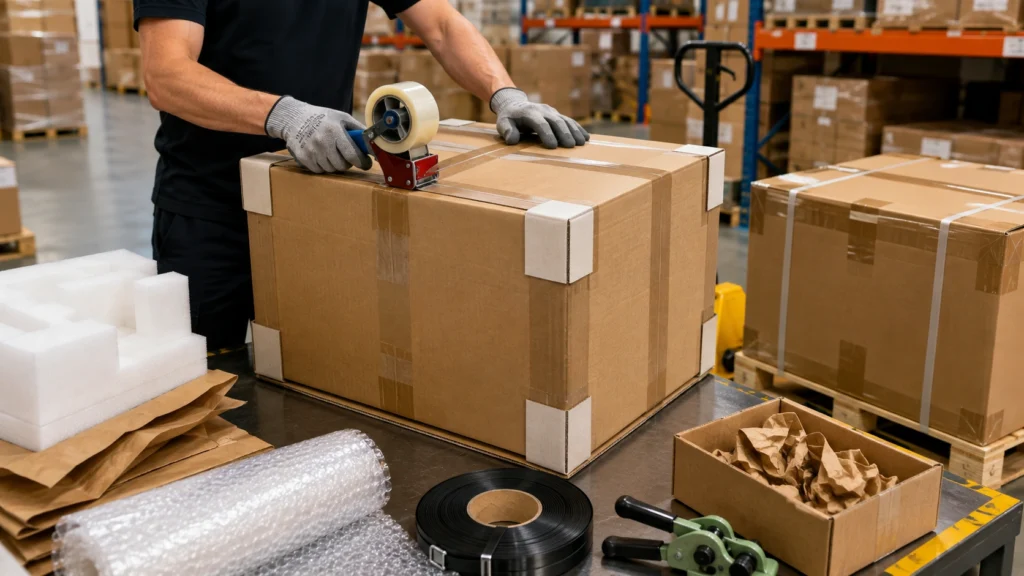
Large and heavy orders require strong packaging that can support the product’s weight throughout handling and transportation. Use double-wall or reinforced cardboard boxes instead of lightweight packaging. Before placing the product inside, check that the bottom of the box is securely sealed with several strips of heavy-duty packing tape.
Heavy items should be positioned in the centre, with strong cushioning placed around every side. Foam inserts, cardboard supports, or protective corner guards can help prevent movement and impact damage. When packing multiple items, avoid placing fragile products underneath heavier ones. The total package weight should be checked to ensure that it remains within the courier’s handling limits.
Large or unusually shaped products may require wooden crates, pallets, or custom packaging.
How to Pack International Orders
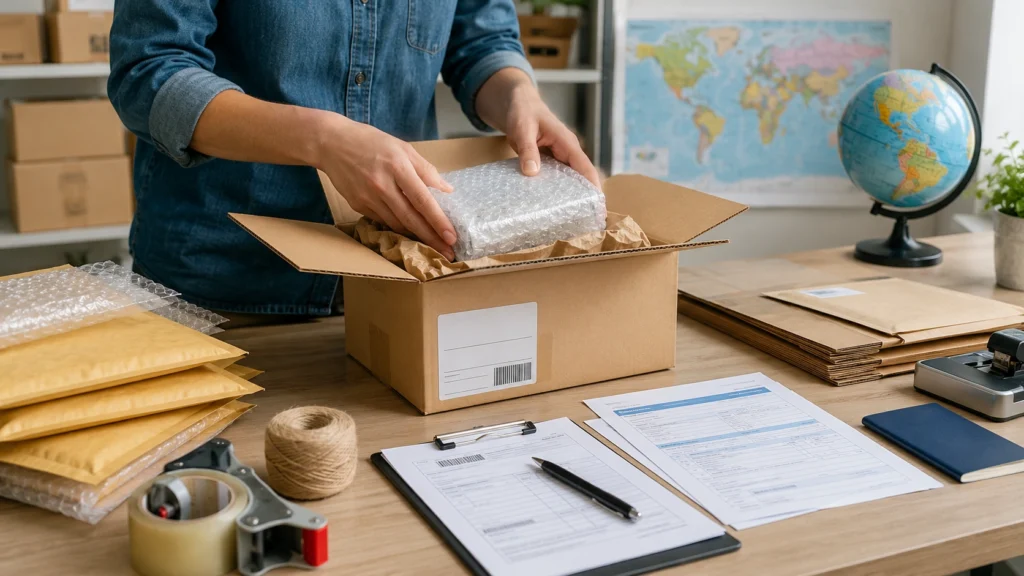
International orders require careful packing because packages may travel long distances and pass through multiple handling and inspection stages. Start by selecting durable packaging that can protect the product from pressure, movement, moisture, and changing weather conditions. Wrap fragile items individually and fill all empty spaces inside the box to prevent movement.
The outer package should be sealed securely with strong tape, especially along every opening and edge. International shipments also require accurate shipping labels and customs documents. Product descriptions, quantities, values, weights, and country-of-origin details should be entered correctly to reduce customs delays.
Certain products may be restricted or require special documentation, so businesses should check the destination country’s current shipping and customs requirements before dispatch. Avoid using damaged or previously labelled boxes.
Custom Packaging Ideas for Online Orders

Custom packaging can help online businesses create a memorable customer experience while protecting products during delivery. Businesses can use printed boxes, branded stickers, tissue paper, custom tape, or colourful mailers to make packages more distinctive.
A thank-you card, care guide, discount voucher, or personalised note can also add value without greatly increasing packaging costs. Products may be arranged using cardboard inserts or dividers to create a cleaner and more professional presentation. Seasonal packaging can be used during holidays, promotions, or special product launches.
Small businesses with limited budgets can begin with plain packaging and add affordable branded elements such as stamps, labels, or printed cards.
How Branded Packaging Improves Customer Experience

Branded packaging improves customer experience by making an order feel more professional, valuable, and memorable. When customers receive a package featuring consistent colours, logos, labels, and design elements, they can immediately recognise the business. This creates a stronger connection between the product and the brand.
Attractive packaging also improves the unboxing experience, which can influence how customers perceive product quality. Simple additions such as branded tape, tissue paper, stickers, thank-you cards, or product instructions can make customers feel appreciated. Well-designed packaging may also encourage buyers to share photographs or videos on social media, providing additional exposure for the business.
However, branded packaging should still be functional, secure, and suitable for the product. Excessive decoration should not increase costs unnecessarily or create avoidable waste.
What Information Should Be Included on a Package Label?
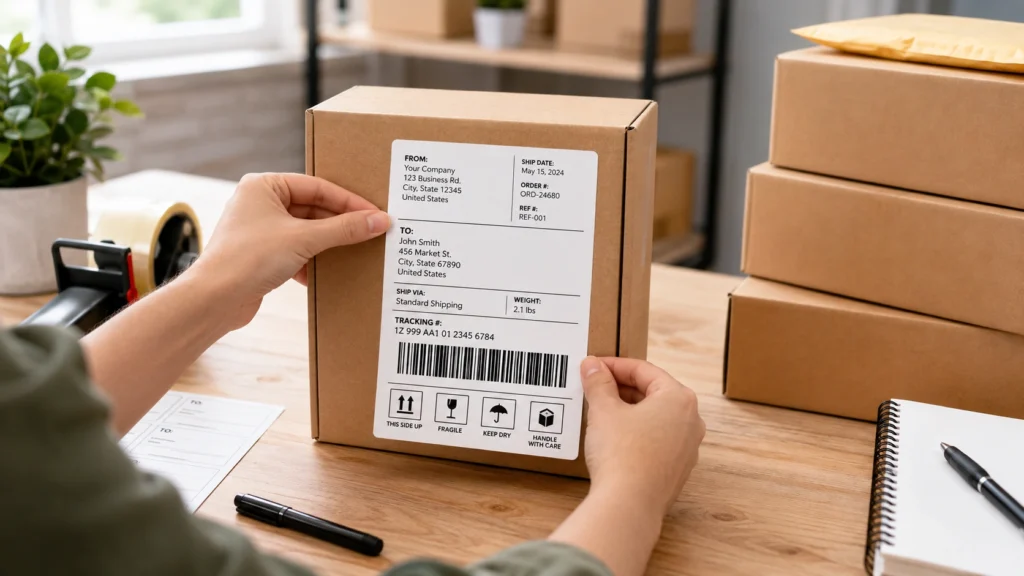
A package label should contain complete and accurate information so the order can be delivered without unnecessary delays. The customer’s full name, complete street address, city, postal code, country, and contact number should be clearly printed. The sender’s name and return address should also be included in case the package cannot be delivered.
Most shipping labels contain a tracking number, barcode, order number, package weight, and selected delivery service. International packages may require customs information, including the product description, quantity, declared value, and country of origin. Special handling labels may also be needed for fragile, heavy, liquid, perishable, or temperature-sensitive products.
All information should be easy to read, and the label should be attached to a flat and visible area of the package. Correct labelling improves courier processing, prevents delivery errors, supports package tracking, and helps customers receive their orders safely and on time.
How to Check Orders Before Packing
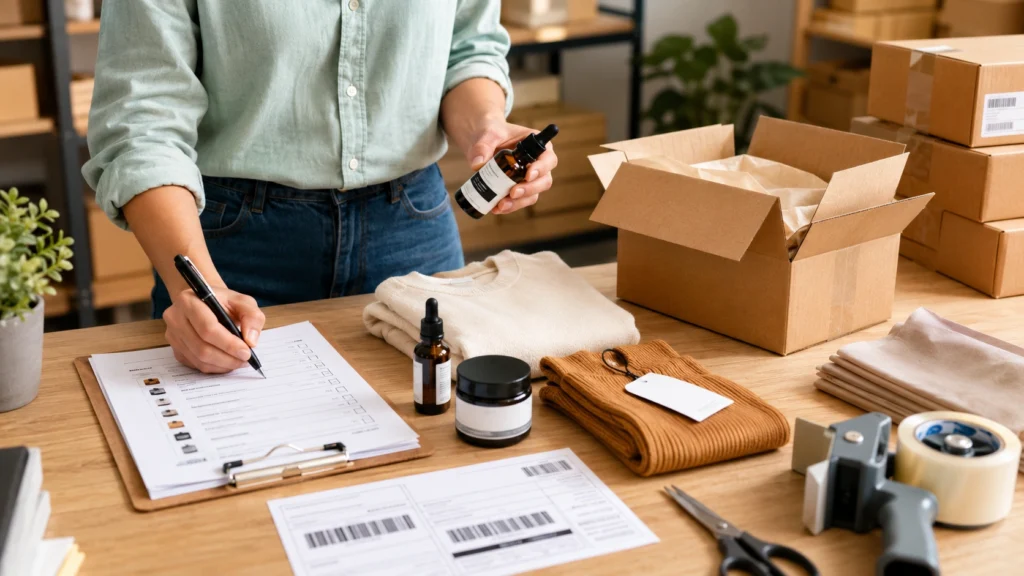
Checking orders before packing is an important step that helps prevent incorrect, incomplete, or damaged shipments. Begin by comparing the product with the customer’s order details, including the item name, model, size, colour, quantity, and product code. Inspect every item for scratches, stains, broken parts, expired dates, or other quality problems.
Any accessories, manuals, promotional items, or additional products included in the order should also be confirmed. The customer’s name, address, delivery method, and special instructions must be reviewed before the package is sealed. Businesses can use printed packing slips, digital checklists, or barcode scanners to improve accuracy.
Once the order has been verified, the employee responsible may mark it as checked in the order management system. A consistent checking process reduces returns, complaints, replacement costs, and negative customer experiences while helping the business maintain reliable order fulfilment standards.
Inventory Management and Order Packing
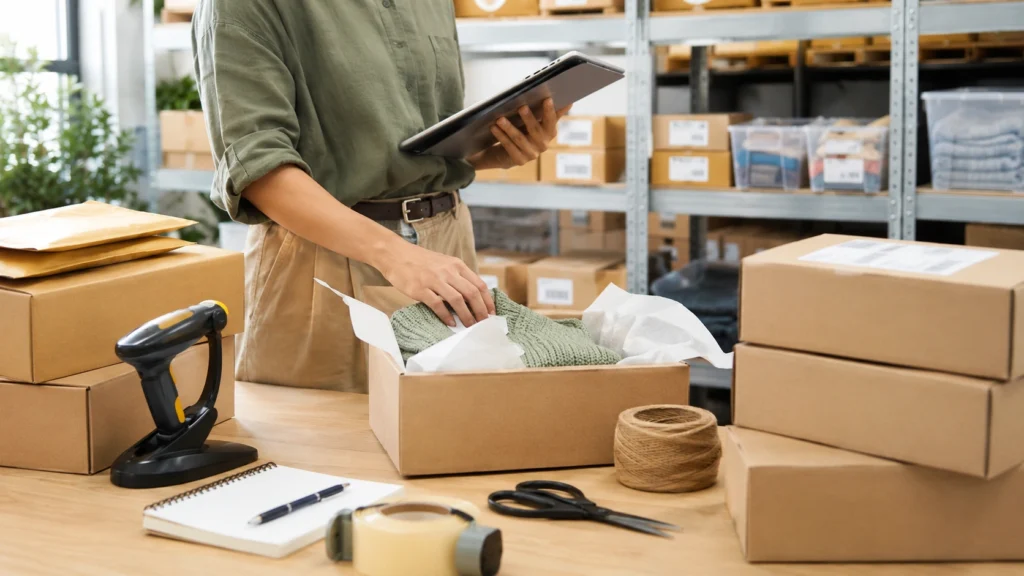
Inventory management and order packing are closely connected because accurate stock information helps businesses fulfil customer orders correctly and efficiently. When an order is received, the inventory system should confirm whether the required product and quantity are available.
After the item is picked, the stock level should be updated immediately to prevent overselling or incorrect inventory records. Products should be stored in clearly labelled shelves, bins, or warehouse locations so employees can find them quickly. Fast-moving items can be placed closer to the packing station to reduce picking time.
Damaged, expired, or returned products should be separated from sellable inventory. Regular stock counts can help identify missing items and system errors. Connecting inventory software with sales and packing systems allows businesses to track products from storage to shipment.
How Barcode Scanning Improves Packing Accuracy
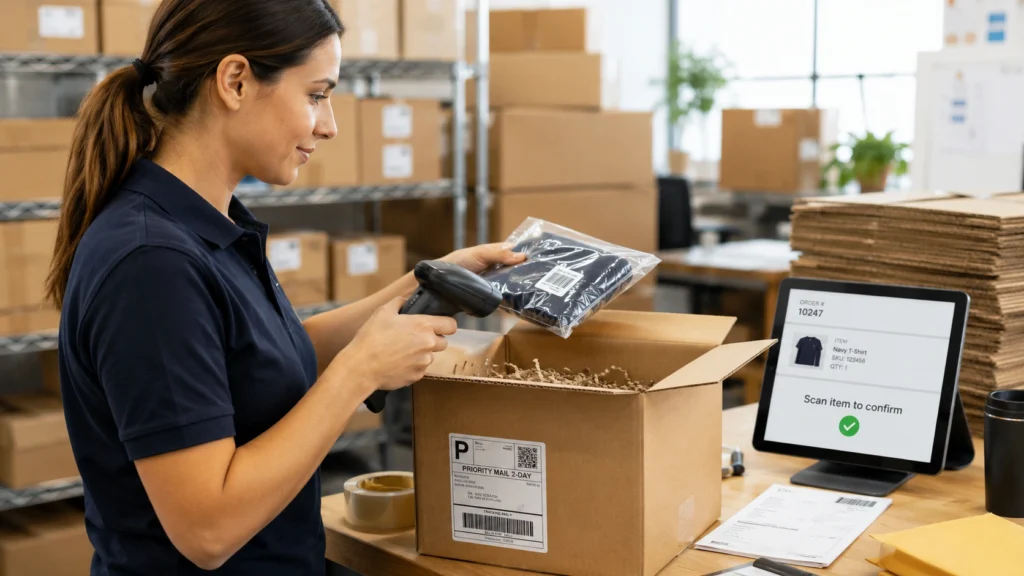
Barcode scanning improves packing accuracy by helping employees confirm that the correct product is being prepared for each customer order. During the picking process, the barcode on the product can be scanned and matched with the item listed in the order management system.
If the wrong product, size, colour, or quantity is selected, the system can display an alert before packing continues. Barcodes can also be used to confirm shipping labels, update inventory levels, record package completion, and track orders through the fulfilment process. This reduces the need for manual data entry, which can lead to typing mistakes or missed information.
Barcode scanners are especially useful for businesses that handle many products or process large numbers of orders daily.
Manual vs Automated Order Packing
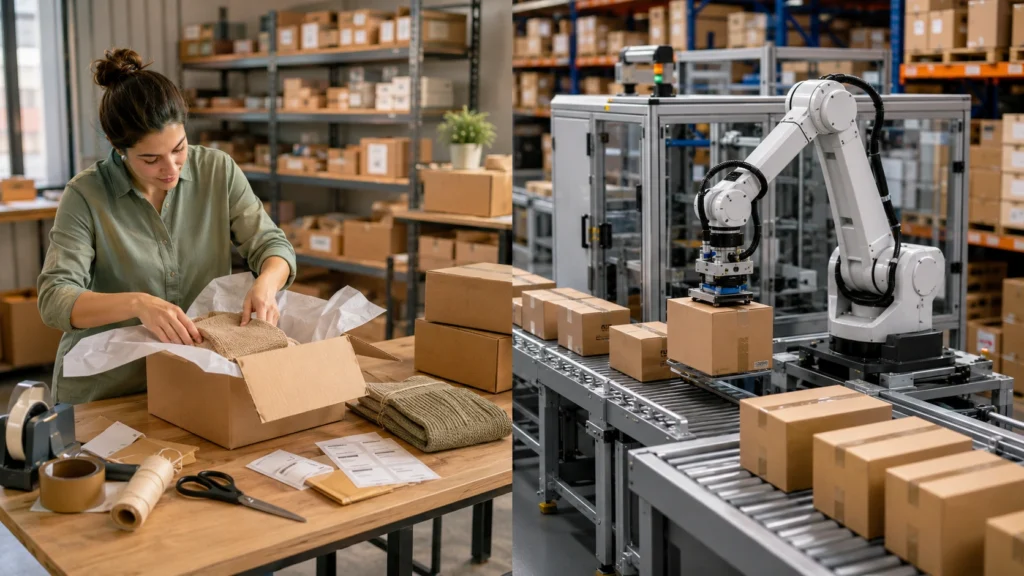
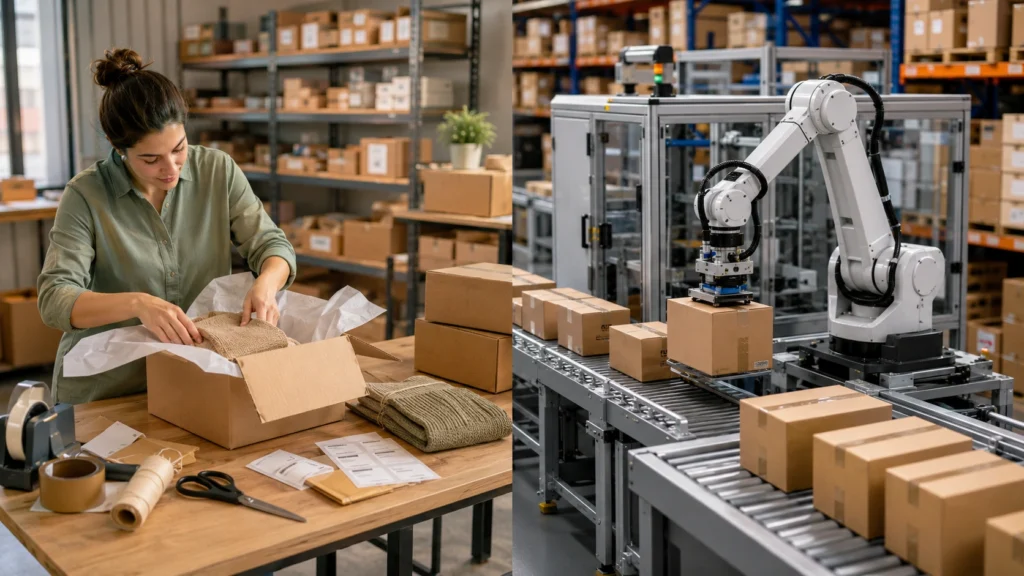
Manual order packing depends mainly on employees to select packaging, arrange products, add protective materials, seal boxes, and attach shipping labels. It is suitable for small businesses, low order volumes, customised products, and items that require careful handling.
Manual packing offers flexibility, but it may become slower and more prone to human error as order volume increases. Automated order packing uses machines, conveyor systems, software, barcode scanners, automatic box sealers, and label printers to complete some or all packing tasks. Automation can improve speed, consistency, and accuracy while reducing labour requirements for repetitive work.
However, automated systems may require significant investment, maintenance, staff training, and suitable warehouse space. Many businesses use a combined approach in which machines handle standard tasks while employees manage fragile, unusual, or personalised orders.
Best Order Packing Software for Businesses
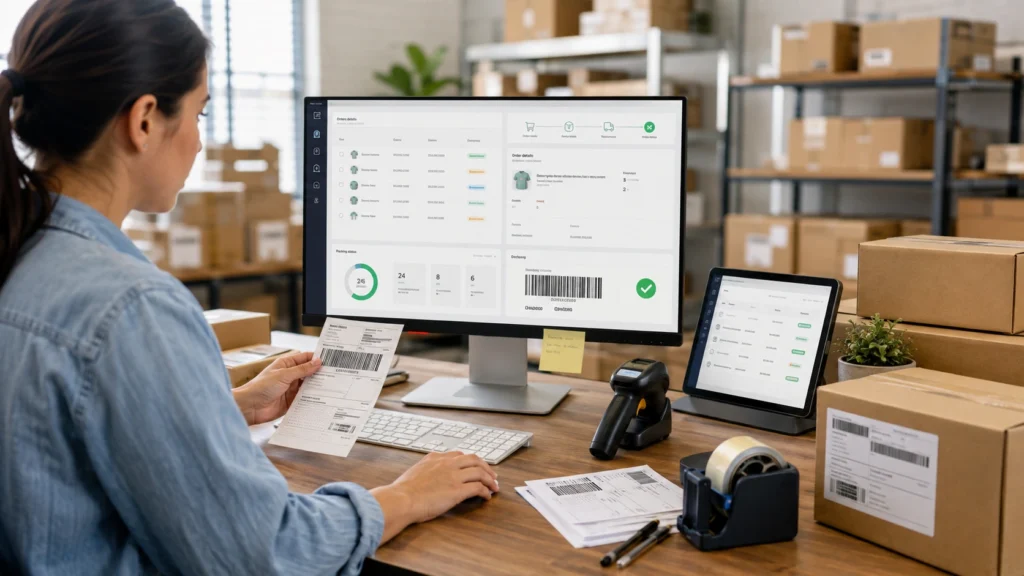
The best order packing software depends on the size of the business, the number of daily orders, available budget, sales channels, and shipping requirements. Small online stores may benefit from Shopify’s built-in fulfilment tools, which allow users to manage orders and print packing slips, shipping labels, and customs documents.
ShipStation is useful for businesses selling through multiple channels because it centralises orders, creates shipping labels, and automates repetitive fulfilment tasks. Zoho Inventory provides order management, barcode scanning, inventory tracking, and shipping integrations, making it suitable for growing businesses.
Odoo can be considered by companies that need a broader inventory and warehouse management system with barcode support. Before choosing software, businesses should test its integrations, reporting features, user limits, customer support, and compatibility with local couriers.
How to Train Staff for Packing Orders

Packing staff should receive practical training before handling customer orders independently. Training should begin with an explanation of the complete process, including reading packing slips, identifying products, checking quantities, selecting packaging, adding protective materials, sealing boxes, and attaching shipping labels.
Employees should also learn how to handle fragile, heavy, liquid, perishable, and high-value products safely. New workers can first observe an experienced employee and then complete sample orders under supervision. Clear packing instructions, photographs, product-specific guidelines, and checklists should be available at every workstation.
Staff must also be trained to use barcode scanners, weighing scales, label printers, packing machines, and order management software correctly. Warehouse training should include safe lifting, good workstation organisation, and awareness of common workplace hazards.
How to Handle Incorrect or Incomplete Orders
Incorrect or incomplete orders should be handled quickly, professionally, and according to a clear company procedure. When a customer reports a problem, the business should first verify the order number, packing record, product details, and shipping information.
The customer may be asked to provide photographs when the wrong item, missing product, or damaged package is involved. After confirming the issue, the business should offer an appropriate solution, such as sending the missing item, replacing the incorrect product, arranging an exchange, or issuing a full or partial refund.
Clear return instructions and prepaid labels may be provided when an item must be sent back. Returns should be inspected, recorded, and added back to inventory only when they remain suitable for sale. The business should also investigate why the mistake occurred.
How to Manage Packing Orders During Busy Seasons
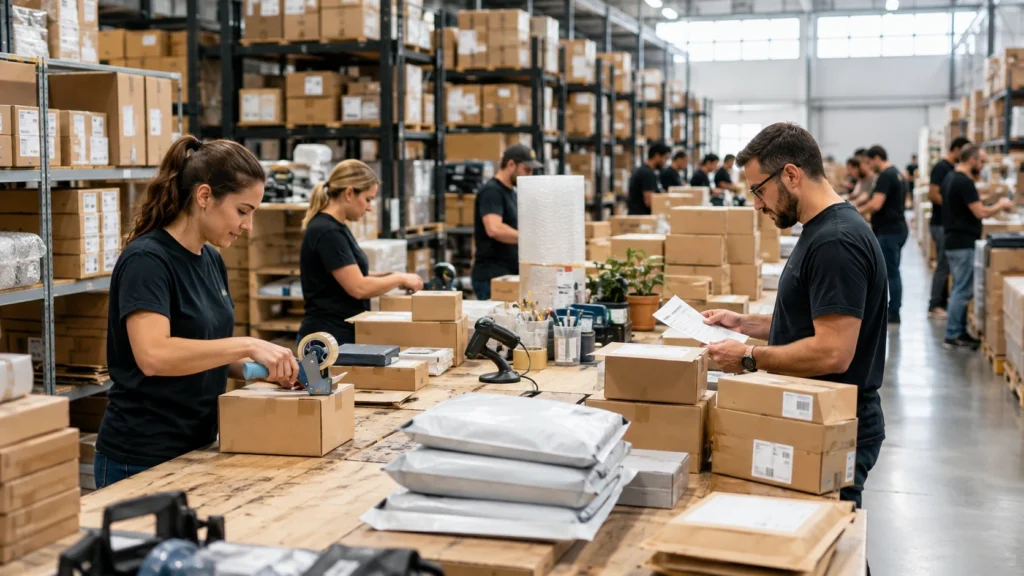
Busy seasons require early preparation because a sudden increase in orders can create packing delays, inventory shortages, and shipping errors. Businesses should review previous sales data to estimate demand, identify popular products, and purchase packaging materials before order volumes rise.
Boxes, mailers, tape, labels, printer supplies, and protective materials should be fully stocked. Temporary staff may be hired and trained in advance rather than during the busiest period. Packing stations should be organised, and frequently ordered products should be stored close to the picking and packing area. Orders can be prioritised according to delivery deadlines, shipping services, or customer requirements.
Batch picking, barcode scanning, and bulk label printing can reduce processing time, but every package should still pass through a final accuracy check. Businesses should also communicate realistic delivery deadlines and possible delays to customers.
Order Packing Checklist for E-Commerce Businesses
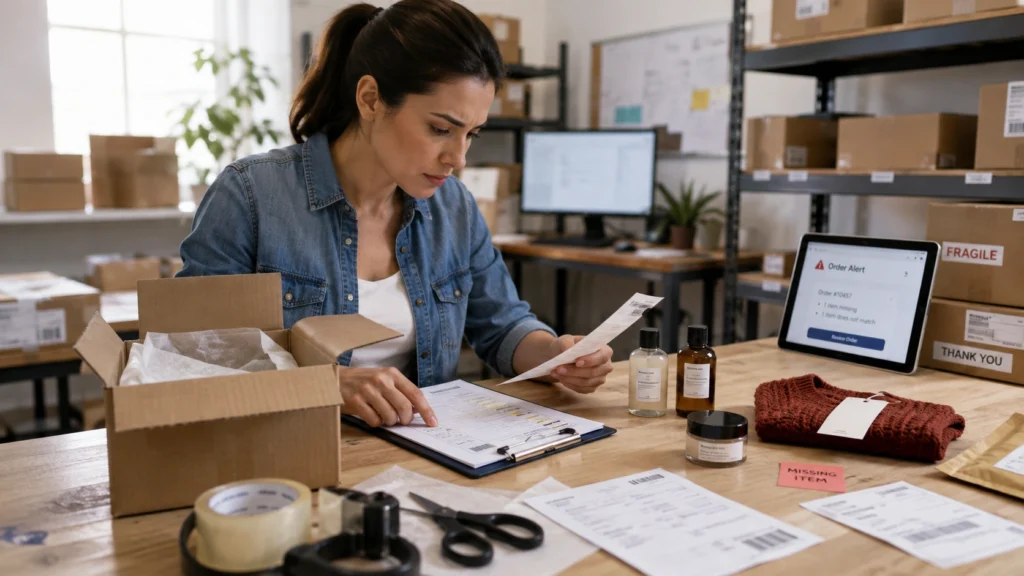
An order packing checklist helps e-commerce businesses maintain accuracy and consistency before packages are handed to a courier. Begin by confirming the customer’s name, order number, delivery address, product name, variant, colour, size, and quantity. Inspect every item for damage, defects, stains, broken seals, or missing accessories.
Select packaging that matches the product’s dimensions, weight, and fragility. Wrap delicate items individually and fill empty spaces so the contents cannot move during delivery. Include the packing slip, invoice, care instructions, return information, or promotional materials when required. Packing slips commonly show product details, quantities, SKU numbers, and shipping information, helping staff confirm package contents.
Seal the package with durable tape, measure its weight and dimensions, and attach the correct shipping label to a visible surface.
How to Include Invoices and Receipts in Orders

Invoices and receipts should be included in orders when customers need proof of purchase, payment details, tax information, or a record for business purposes. Before packing, make sure the document matches the correct customer, order number, products, quantities, prices, discounts, taxes, and payment status.
The invoice or receipt should be folded neatly and placed inside a document sleeve, envelope, or a clean area of the package where it will not be damaged by liquids or heavy products.
For gift orders, businesses may exclude prices and include a gift receipt instead. International shipments may require commercial invoices to be attached outside the package for customs inspection.
Should You Add Thank-You Cards to Packed Orders?
Adding a thank-you card to packed orders can improve the customer experience and make the purchase feel more personal. A simple card can express appreciation, provide care instructions, share contact information, or offer a discount on a future order. Small businesses can use handwritten notes to create a personal connection, while larger stores may use printed cards with consistent branding.
The message should be brief, genuine, and easy to read. Businesses may also include a request for feedback or encourage customers to share their purchase on social media. However, thank-you cards should not contain excessive promotional content or unnecessary information. Recyclable paper and minimal printing can help reduce waste.
Although thank-you cards are not essential for every order, they can strengthen customer relationships, improve brand recognition, encourage repeat purchases, and create a more memorable unboxing experience.
How to Track Packed and Shipped Orders
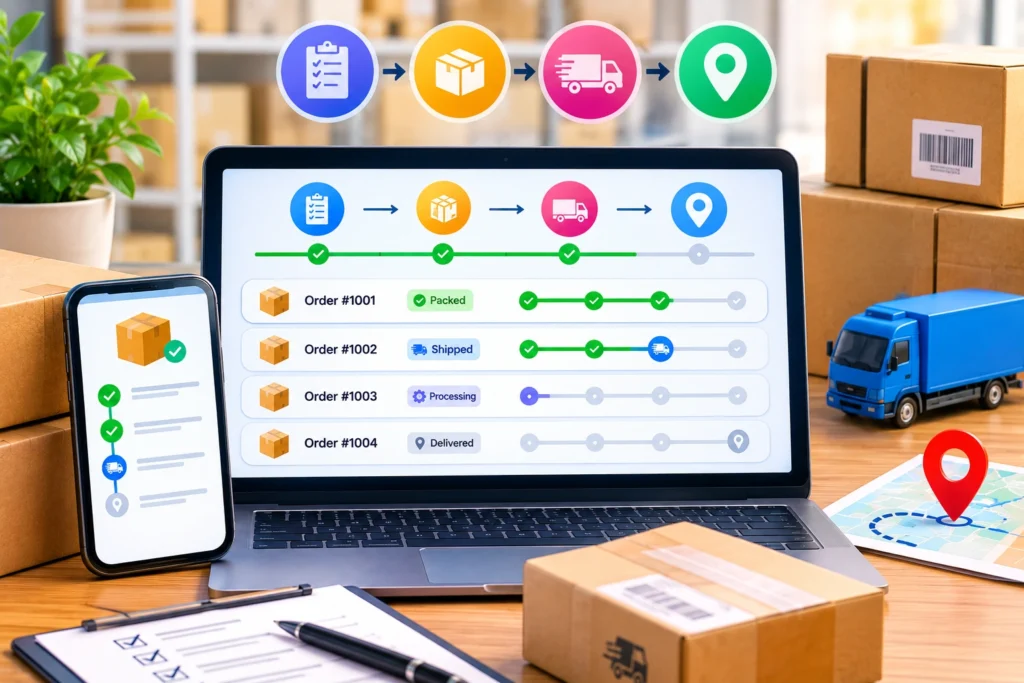
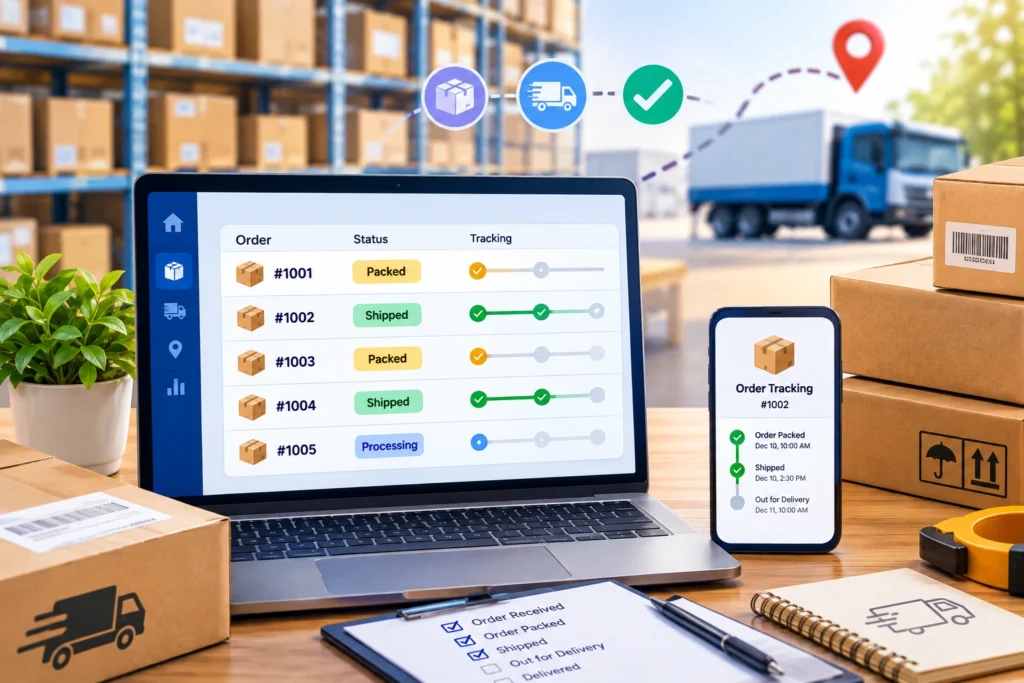
Tracking packed and shipped orders helps businesses monitor fulfilment progress and keep customers informed. Once an order has been checked and packed, its status should be updated in the order management system. A shipping label and tracking number can then be generated through the selected courier service.
The tracking number should be linked to the correct order and sent to the customer by email, text message, or account notification. Businesses should monitor shipments for delays, failed delivery attempts, address problems, or packages that remain inactive for an unusual period. Barcode scanning can also record when an order is packed, moved to the dispatch area, and handed to the courier.
Tracking information should be stored with the order history for customer support and future reference. An organised tracking process improves visibility, reduces customer enquiries, helps resolve delivery problems, and allows businesses to maintain reliable shipping records.
How to Improve Order Packing Accuracy
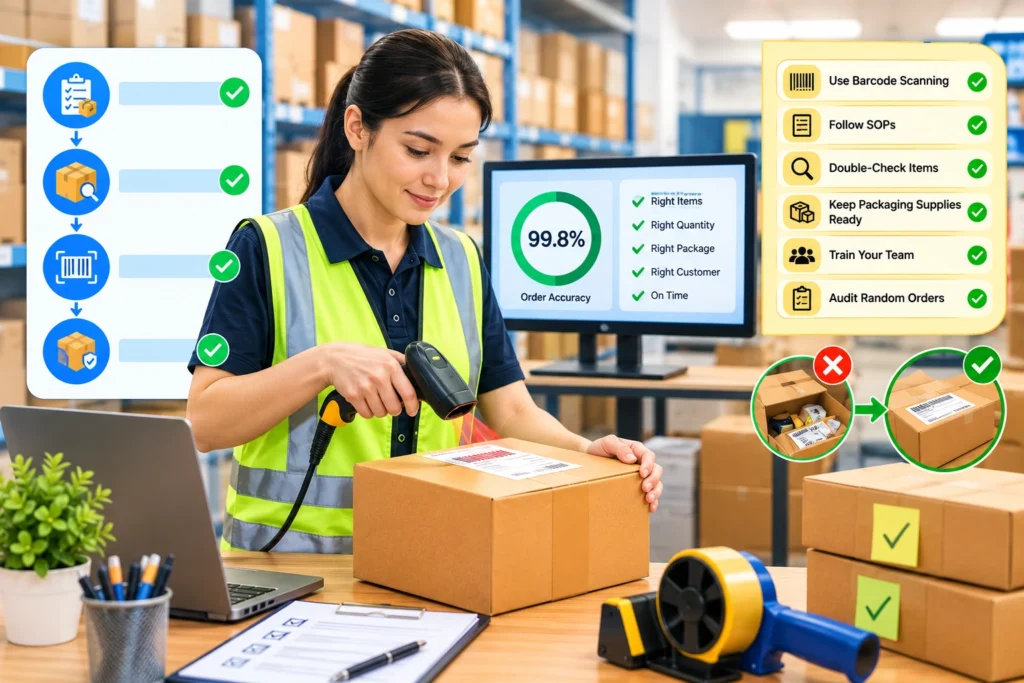
Improving order packing accuracy requires a consistent process for checking products, quantities, customer details, and shipping labels. Each order should be compared with its packing slip before products are placed inside the package. Barcode scanners can confirm product codes, sizes, colours, and quantities while reducing manual entry errors.
Orders should be kept in separate trays or clearly marked areas so products and labels do not become mixed. Packing stations must remain clean, organised, and supplied with the correct materials. Employees should follow a standard checklist and receive training for different product types. A second check may be required for expensive, fragile, customised, or large orders.
Businesses should also review return reasons, customer complaints, and packing mistakes to identify repeated problems. Regular performance checks and clear procedures can reduce incorrect shipments, missing items, unnecessary returns, replacement costs, and customer dissatisfaction.
Final Thoughts
Packing orders safely, quickly, and professionally requires more than placing products inside a box. Businesses must choose suitable packaging, verify every item, use protective materials correctly, attach accurate labels, and maintain clear records throughout the fulfilment process. An organised packing station, trained staff, reliable inventory management, barcode scanning, and order tracking can improve both speed and accuracy. Packaging should protect the product without creating unnecessary costs or waste. Businesses should also consider the customer experience by using clean presentation, branded materials, clear documentation, and helpful inserts where appropriate. Regularly reviewing packing errors, shipping costs, damaged deliveries, and customer feedback can reveal areas that need improvement. A consistent and well-managed packing process reduces returns, prevents delays, controls expenses, and helps customers receive their orders in good condition. Over time, professional order packing can strengthen customer trust, improve brand reputation, and support sustainable business growth.